Last updated October 30, 2026
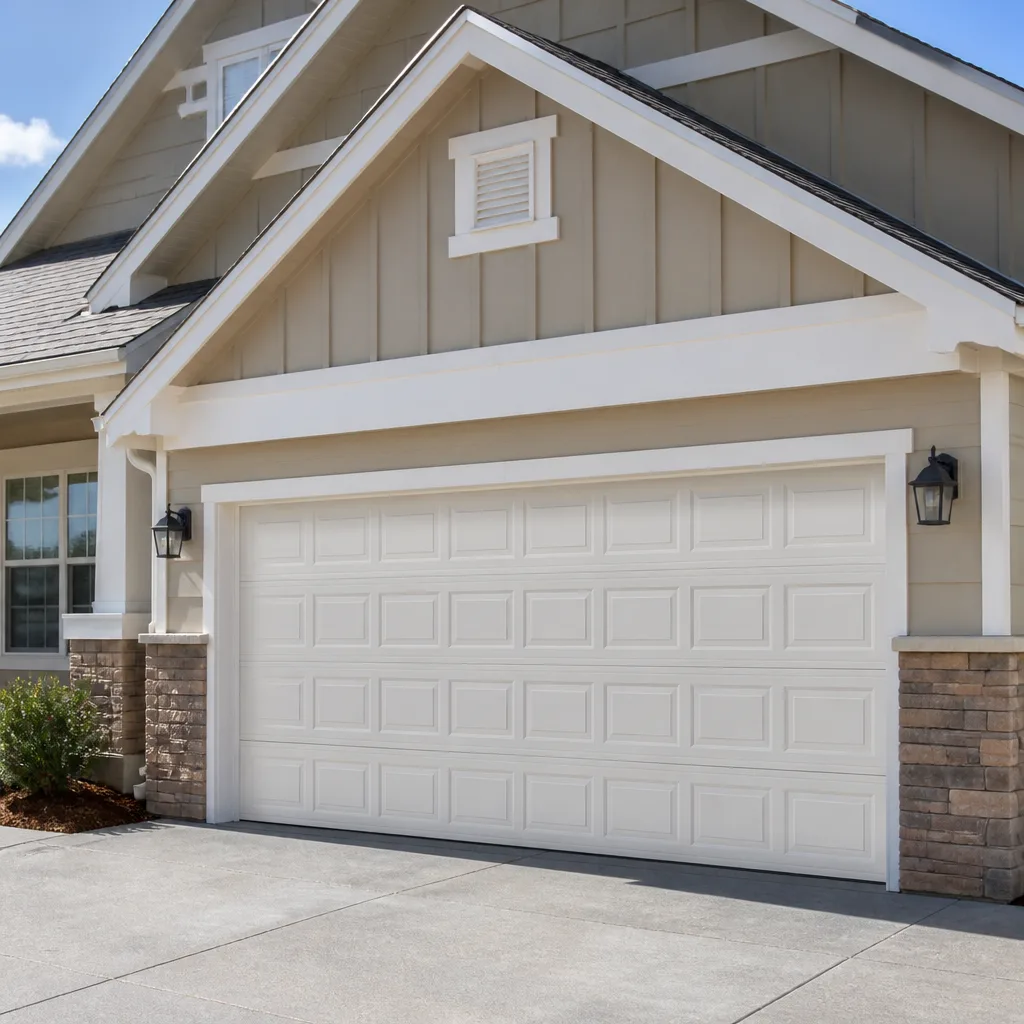 Raised-panel steel
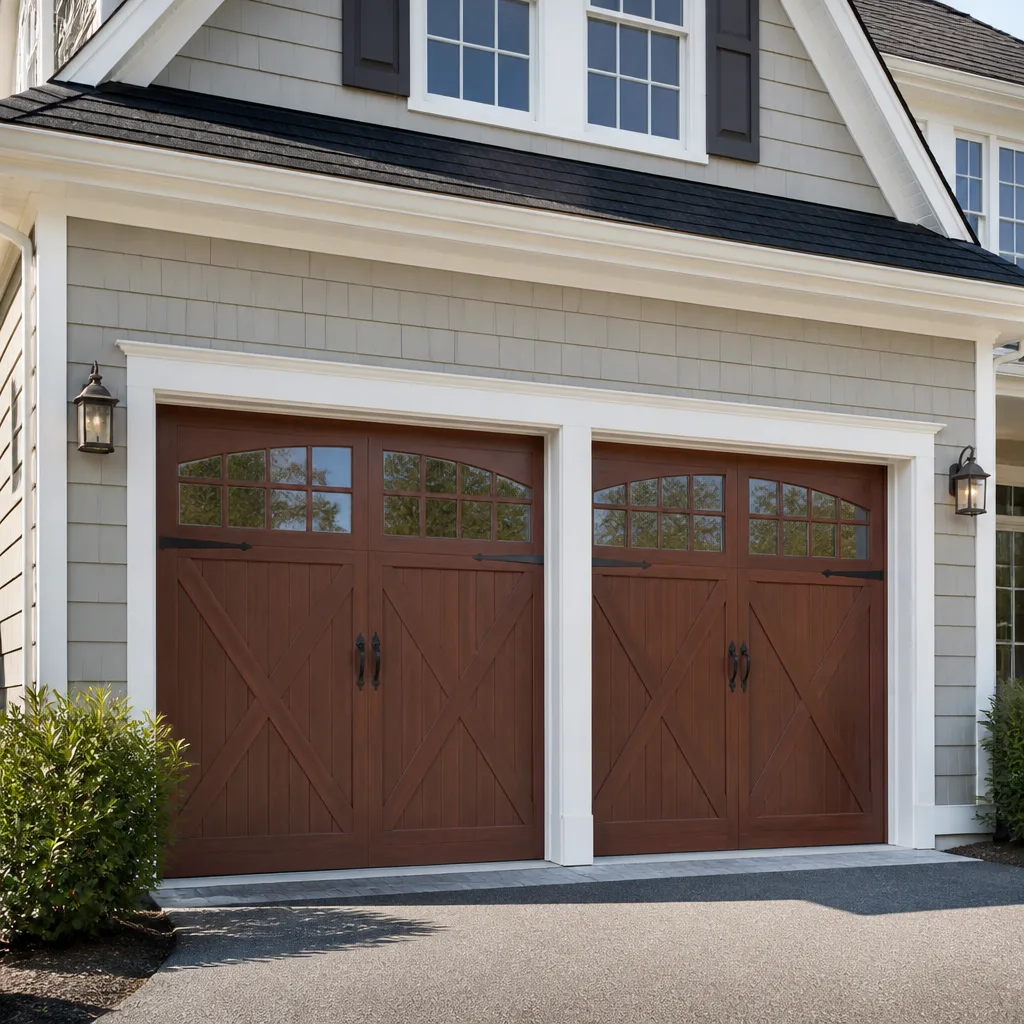 Carriage house
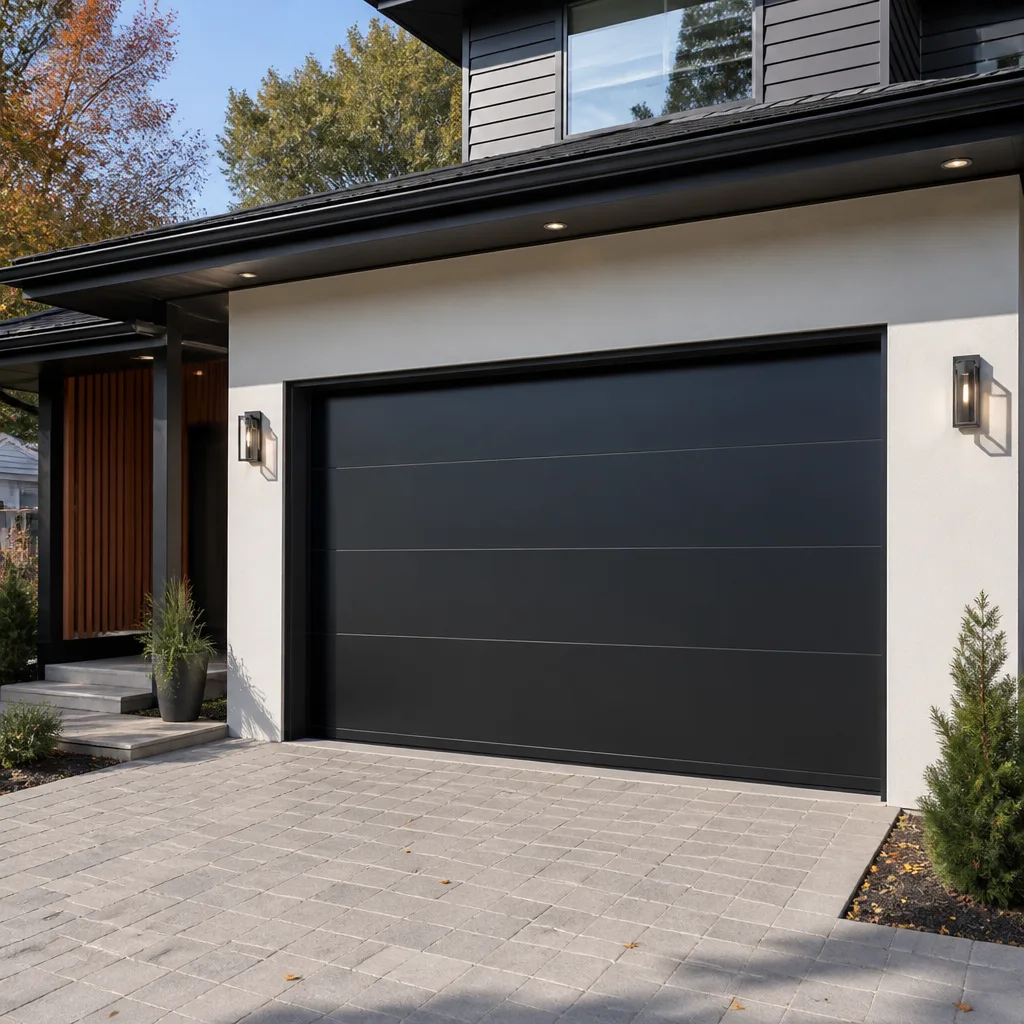 Modern flush
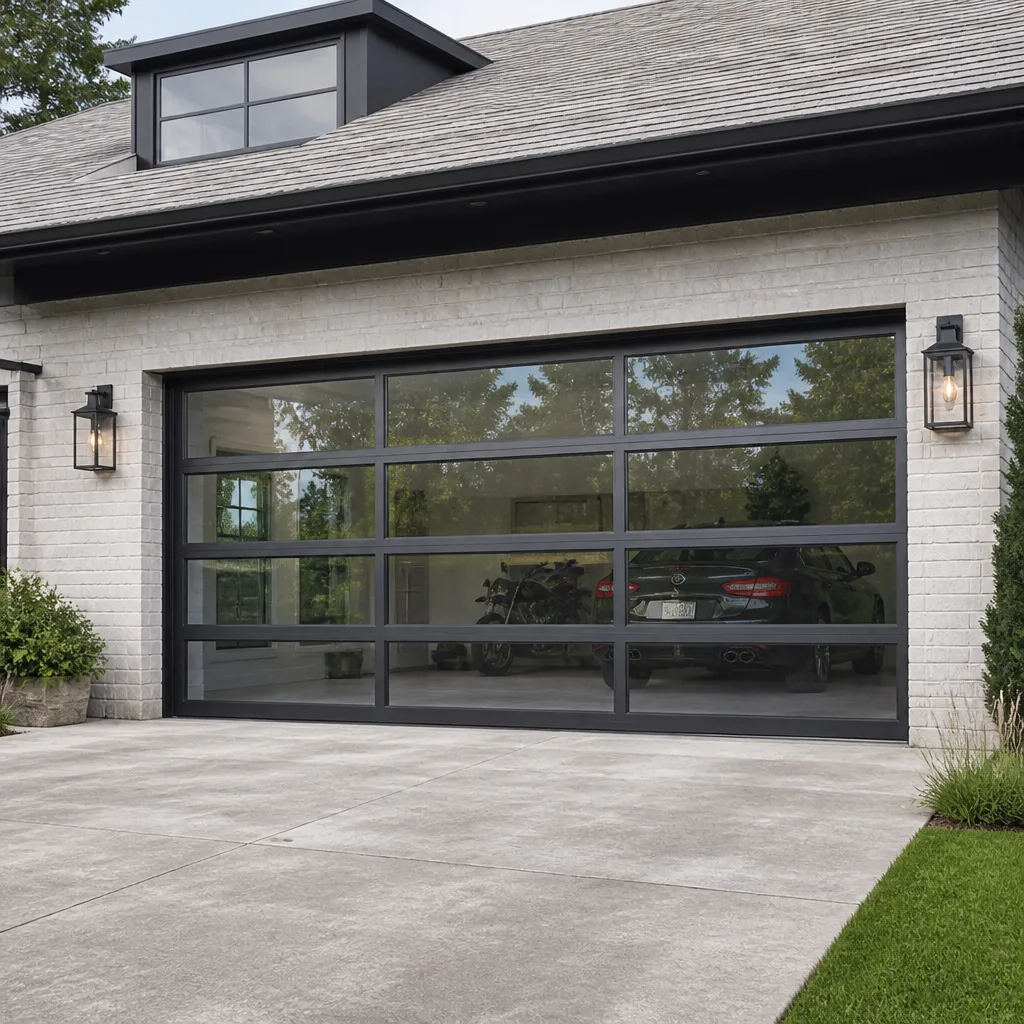 Full-view glass
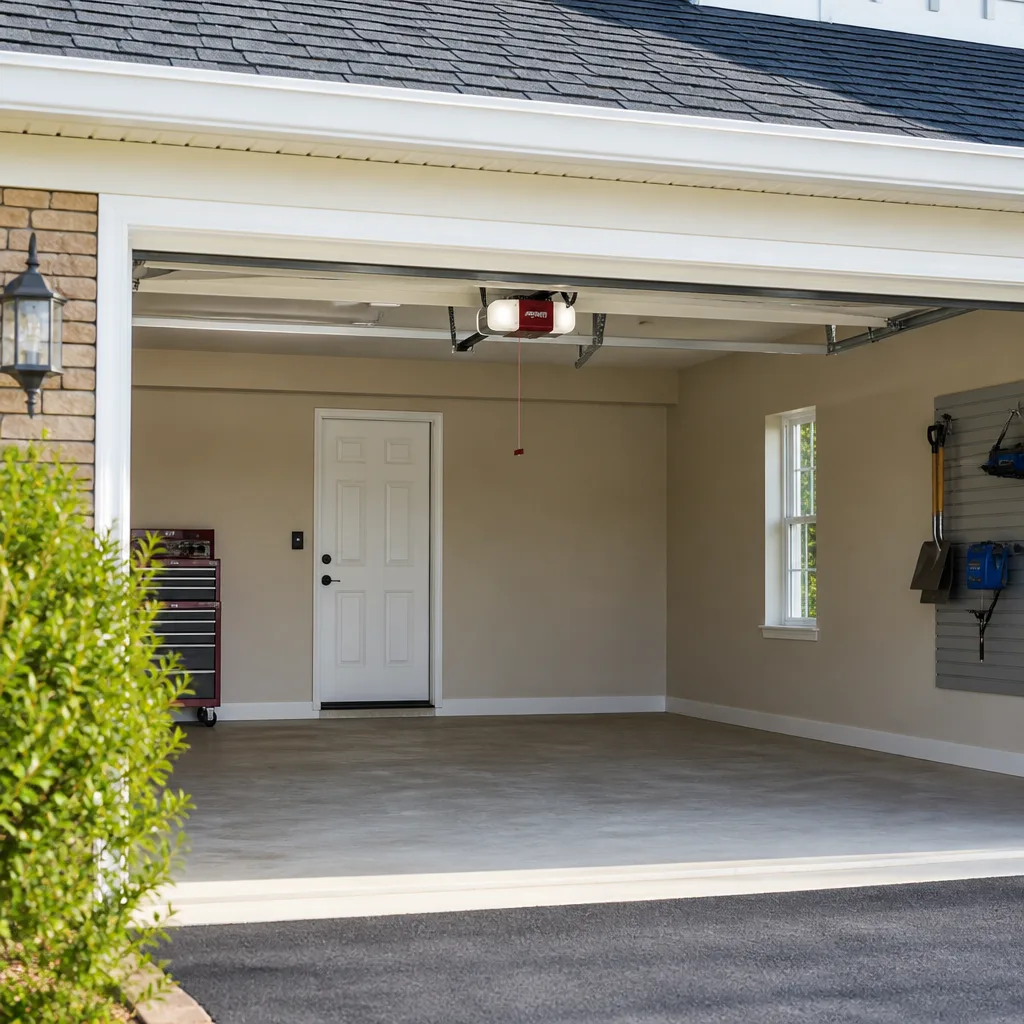 LiftMaster openers
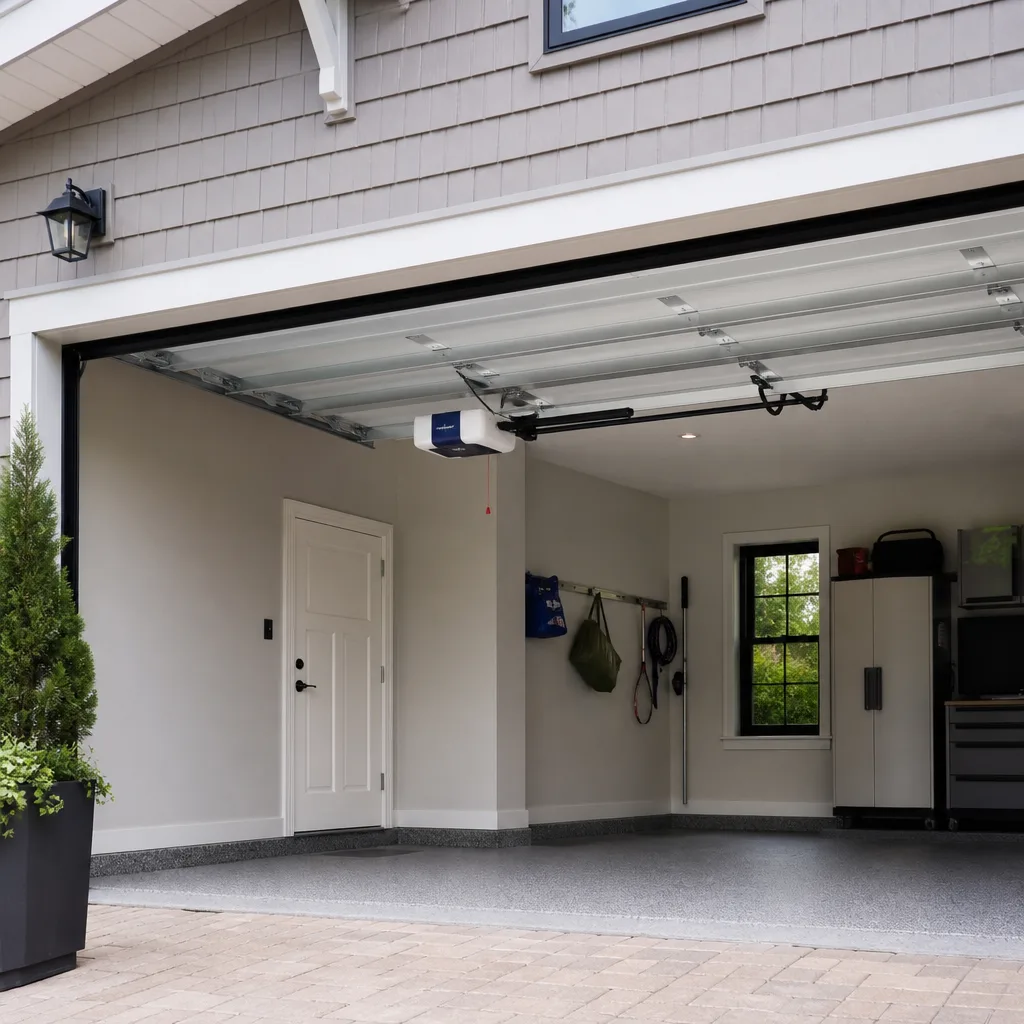 Chamberlain openers
Full 25-point door and opener safety check with every visit - springs, cables, rollers, tracks, and your LiftMaster or Chamberlain opener included
You get a price before we start. It does not change when the truck arrives.
Get your free estimateThe Complete Garage Door Repair Guide for Los Angeles Homeowners
Most garage door advice online was written for suburban Ohio or Chicago. It assumes snow, freezing temperatures, and uniform seasonal change. Los Angeles is none of those things. A garage door in Mar Vista behaves differently than one in Woodland Hills, and both behave differently than one in Silver Lake or La Cañada Flintridge. This guide covers what actually fails on Los Angeles garage doors, why it fails faster here than the national average, what you can safely check yourself, and when to get a specialist on site for our Garage Door Repair services. You’ll also learn how LA’s building codes, contractor licensing rules, and microclimates shape the repair-vs-replace decision.
Styles & brands we work with
Quick Answer
Garage door repair in Los Angeles typically costs between $180 and $340 for common fixes like torsion spring replacement or cable realignment, with most repairs completed the same day by a specialist who stocks parts for your specific brand. For The Complete Guide to Garage Door in Los Angeles, see our detailed resource. If your door won’t open, makes grinding noises, or sits crooked in the track, stop using it and call a licensed technician. LA’s combination of coastal moisture, valley heat, and wildfire ash shortens the service life of springs, cables, and rollers compared to inland climates, which means annual inspection is not optional here.
Table of Contents
- Why Los Angeles Is Harder on Garage Doors Than You Think
- The Most Common Garage Door Failures in LA Homes
- What You Can Safely Do Yourself vs. What Requires a Pro
- What Garage Door Repair Actually Costs in Los Angeles
- Brand-Specific Quirks in Los Angeles Housing Stock
- Repair or Replace: A Decision Framework for LA Homeowners
- California Contractor Law, Permits, and Your Rights
- The LA Maintenance Schedule That Prevents Most Breakdowns
- Common Mistakes to Avoid
- When to Call a Professional
- Frequently Asked Questions
- The Bottom Line
Why Los Angeles Is Harder on Garage Doors Than You Think
The average LA homeowner Googles “garage door repair Los Angeles” only after something breaks. But by then, the damage has usually been building for months. The San Fernando Valley’s summer heat regularly runs 95 to 105 degrees for weeks at a time. That sustained heat doesn’t just feel uncomfortable, it degrades the molecular structure of torsion spring steel. A spring rated for 10,000 cycles in a mild climate may fail 20 to 30 percent sooner in Woodland Hills or Encino. We’ve seen springs snap after 6 or 7 years in Valley garages that would have lasted a decade in coastal Long Beach.
Coastal neighborhoods have the opposite problem. Salt-laced marine air from Santa Monica, Venice, and Playa del Rey accelerates rust on cables, hinges, and track hardware. A galvanized cable that would last 15 years in Pasadena might show visible corrosion in 8 years three blocks from the beach. The moisture doesn’t cause dramatic overnight failures. It causes slow, quiet degradation that makes a cable snap unexpectedly one morning when the load shifts.
Then there’s the citywide issue: wildfire ash. During fire season, fine particulate ash settles into every gap, crevice, and bearing surface on your garage door system. Ash is alkaline and slightly abrasive. It works its way into roller bearings, collects inside tracks, and mixes with lubricant to form a gritty paste that wears down nylon rollers and metal hinges. Even homes miles from an active burn zone get ash accumulation from smoke drift.
Add in hillside homes with uneven settling, older garage frames that shift with soil movement, and thousands of mid-century properties with original door systems, and you have an environment where generic repair checklists fail. Los Angeles garage doors need LA-specific diagnosis.
The Most Common Garage Door Failures in LA Homes
After years of service calls across Los Angeles, we can tell you exactly what fails and in what order. These are the patterns, not the exceptions.
1. Torsion Spring Failure
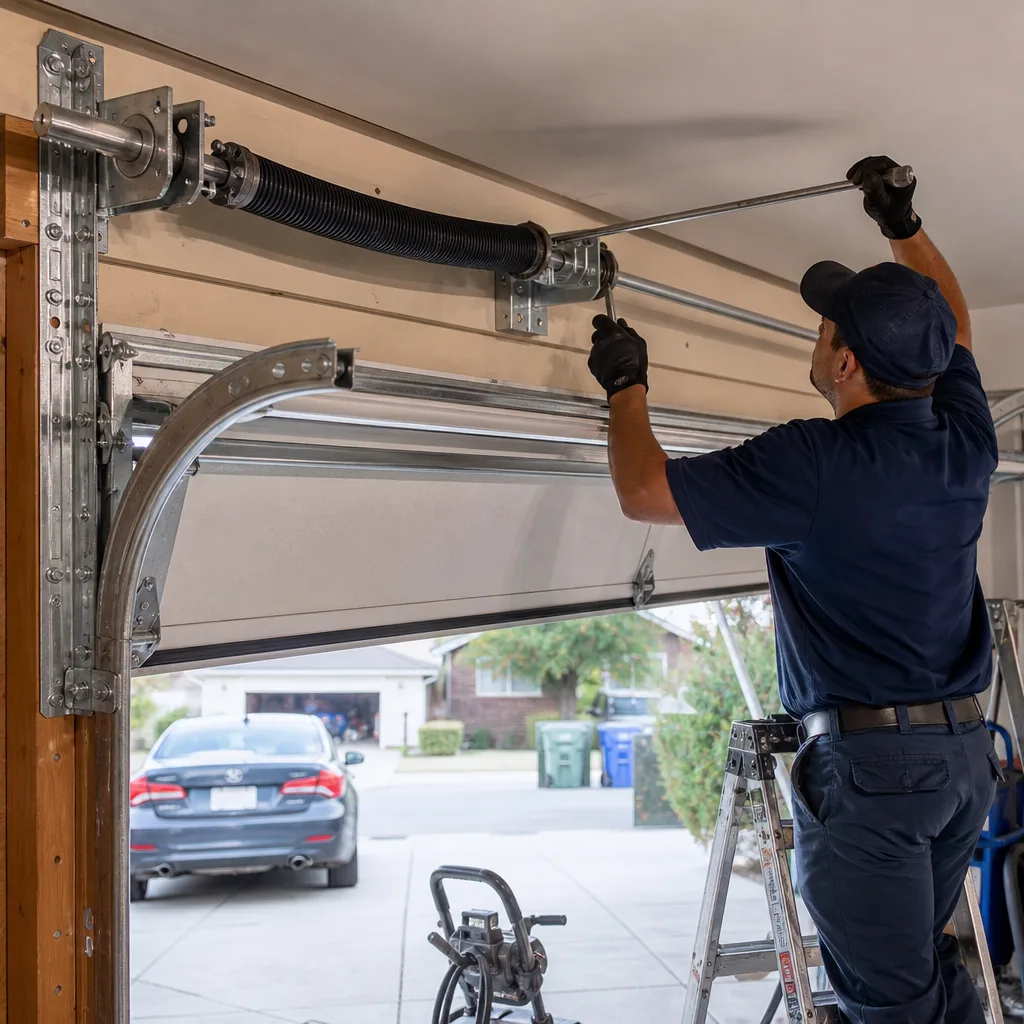
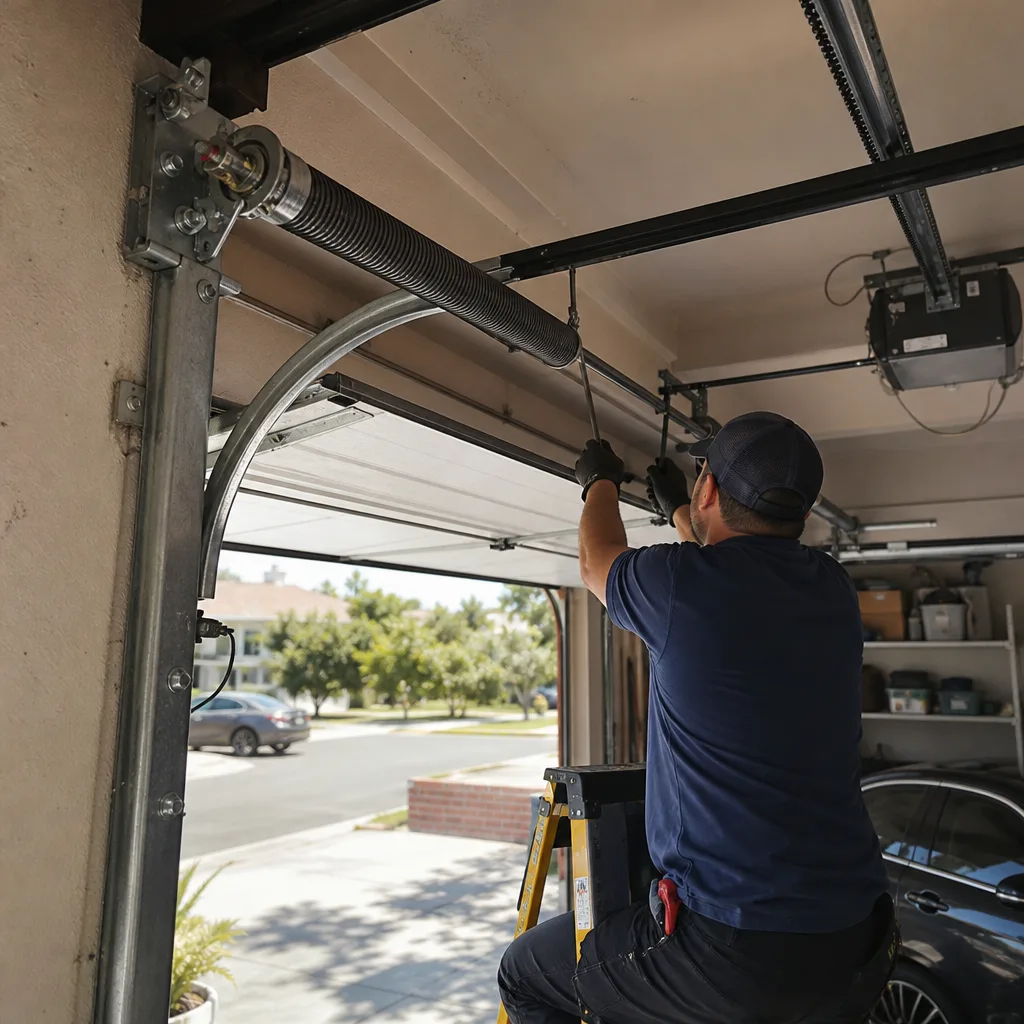
Torsion springs do the heavy lifting. They counterbalance the door’s weight so a motor doesn’t have to. Every LA microclimate shortens their life. In the Valley, heat fatigue is the killer. Near the coast, it’s corrosion. In hillside areas, it’s often both plus frame settling that introduces uneven tension. When a torsion spring snaps, it sounds like a gunshot inside the garage. The door becomes nearly impossible to lift manually, and trying to operate the opener with one broken spring strains the motor and can burn it out.
Symptoms: loud bang from the garage, door feels impossibly heavy, opener strains or refuses to move the door, visible gap in the spring coil above the door.
2. Cable Wear and Fraying
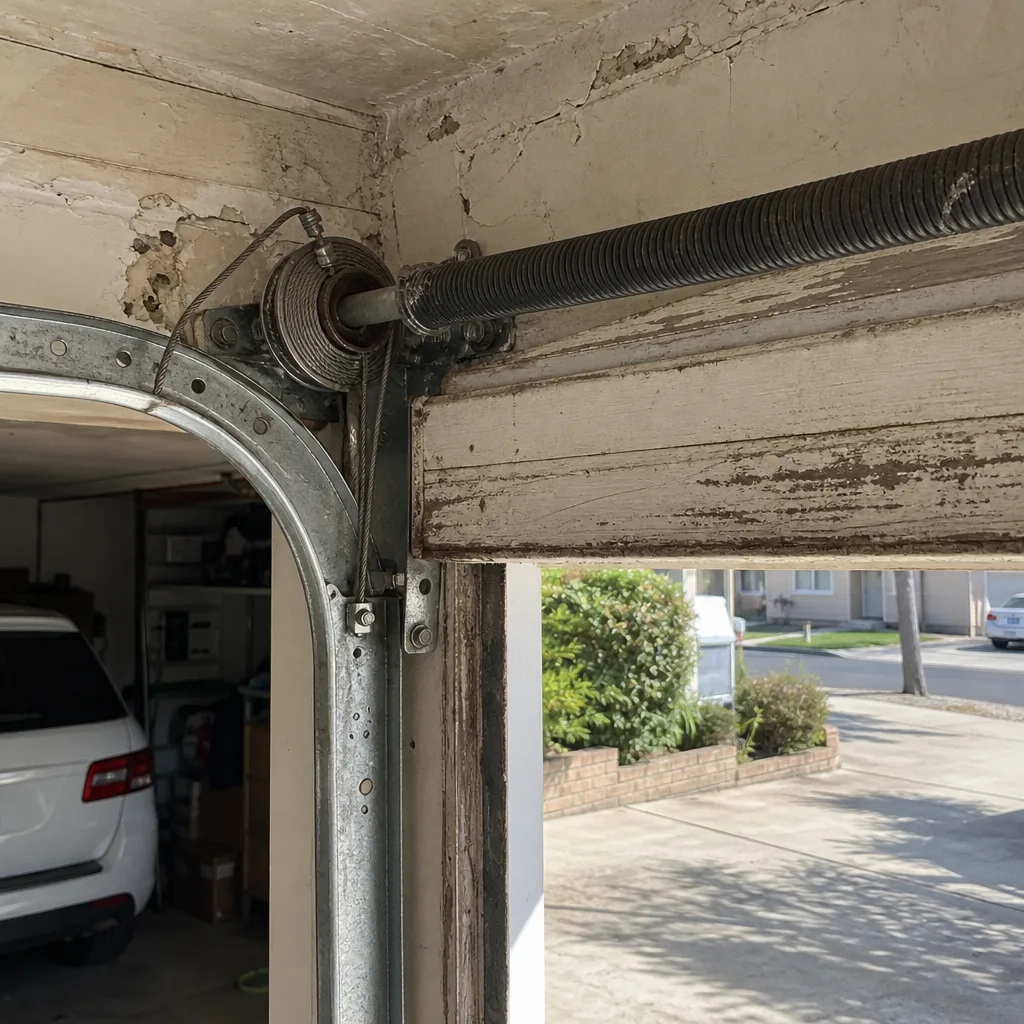
Steel cables run along both sides of the door and do the actual hoisting. LA’s coastal salt air and ash particles settle on these cables and work into the strands. You’ll see rust staining first, then individual wire strands breaking away. A frayed cable can fail without warning. When one cable snaps, the door jerks violently to one side, bending track sections and sometimes damaging the panels themselves. This is a safety hazard that requires prompt attention.
3. Roller and Hinge Degradation
Nylon rollers last longer than steel in LA because they resist corrosion better, but the bearings inside them wear faster when contaminated with ash and dust. Metal rollers near the coast rust at the bearings first. Worn rollers make a grinding or squealing sound and cause the door to shudder on its way up or down. Replacing all rollers on a double door typically costs $120 to $200, and it’s one of the highest-value preventive maintenance items in this city.
4. Track Misalignment
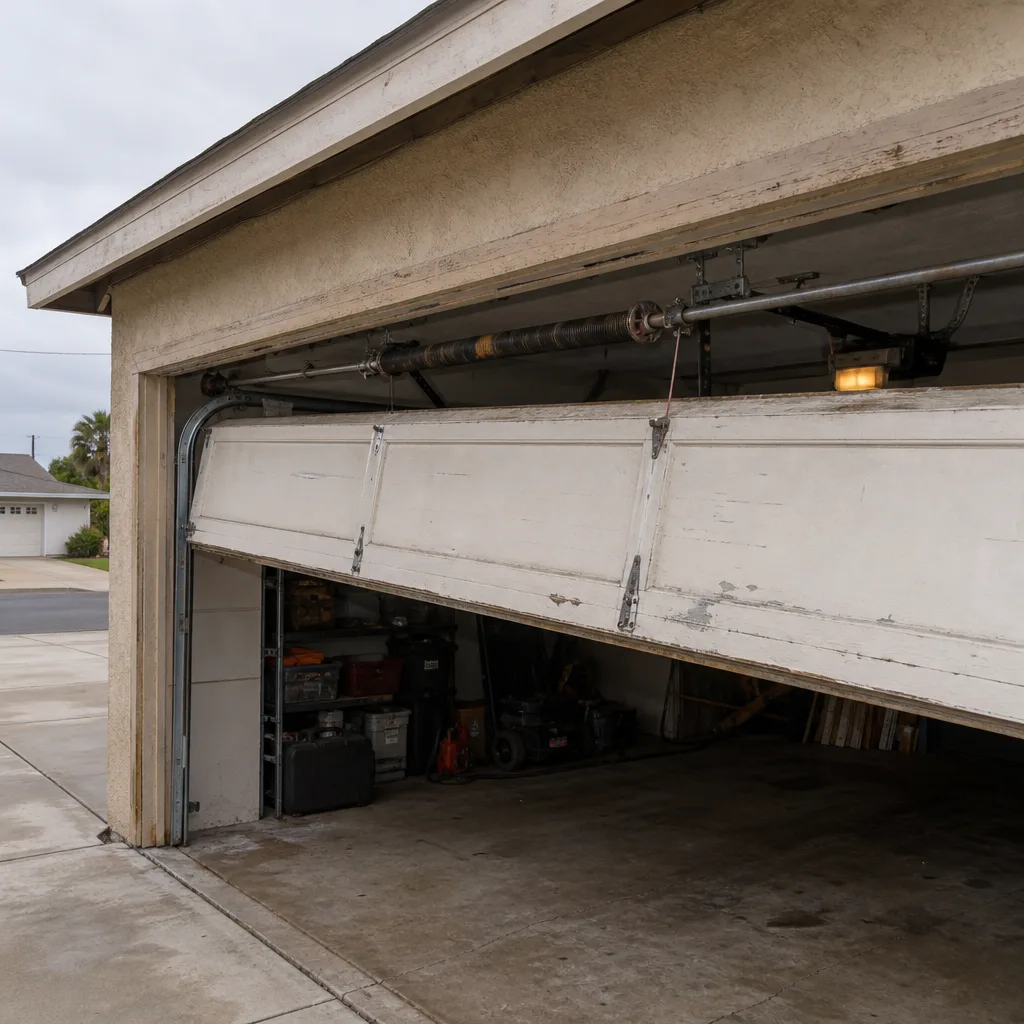
Garage tracks are bolted to the framing. In older LA homes, especially in the hills, wood framing shifts with soil movement, seasonal moisture changes, and the occasional small earthquake. Even a quarter-inch of track misalignment causes the door to bind, rub, or come off its rollers entirely. If your door gets stuck halfway or you hear metal-on-metal scraping, track alignment is usually involved.
5. Opener Motor and Logic Board Issues
Your opener is its own system. LA’s heat is hard on opener motors, especially in garages that aren’t insulated. Motors running in 100+ degree garage interiors overheat more quickly and wear out their windings faster. Logic boards in newer smart openers from brands like Genie or Chamberlain are sensitive to power fluctuations, which LA neighborhoods experience during heat waves when grid stress spikes. When an opener fails, it’s often the motor or the board, not the door itself.
What You Can Safely Do Yourself vs. What Requires a Pro
California law is specific about who can work on garage doors, and the safety stakes are real.
Safe for Most Homeowners:
- Visual inspection: Look for frayed cables, rusted hardware, loose bolts, and visible spring gaps. Don’t touch anything under tension.
- Clearing track debris: Wipe out loose dirt and small obstructions from the tracks with a dry cloth. Do not use grease here; tracks stay dry.
- Testing safety sensors: Wave your foot in front of the photo eye sensors near the bottom of the rails. The door should reverse. If it doesn’t, clean the sensor lenses with a soft cloth.
- Lubricating with the right product: A spray lithium grease or silicone lubricant on hinges, rollers, and springs is fine. WD-40 is not a lubricant for this application.
- Replacing weather stripping: The rubber strip along the bottom of the door is a consumable and anyone with a utility knife and a ladder can replace it.
Requires a Trained Technician:
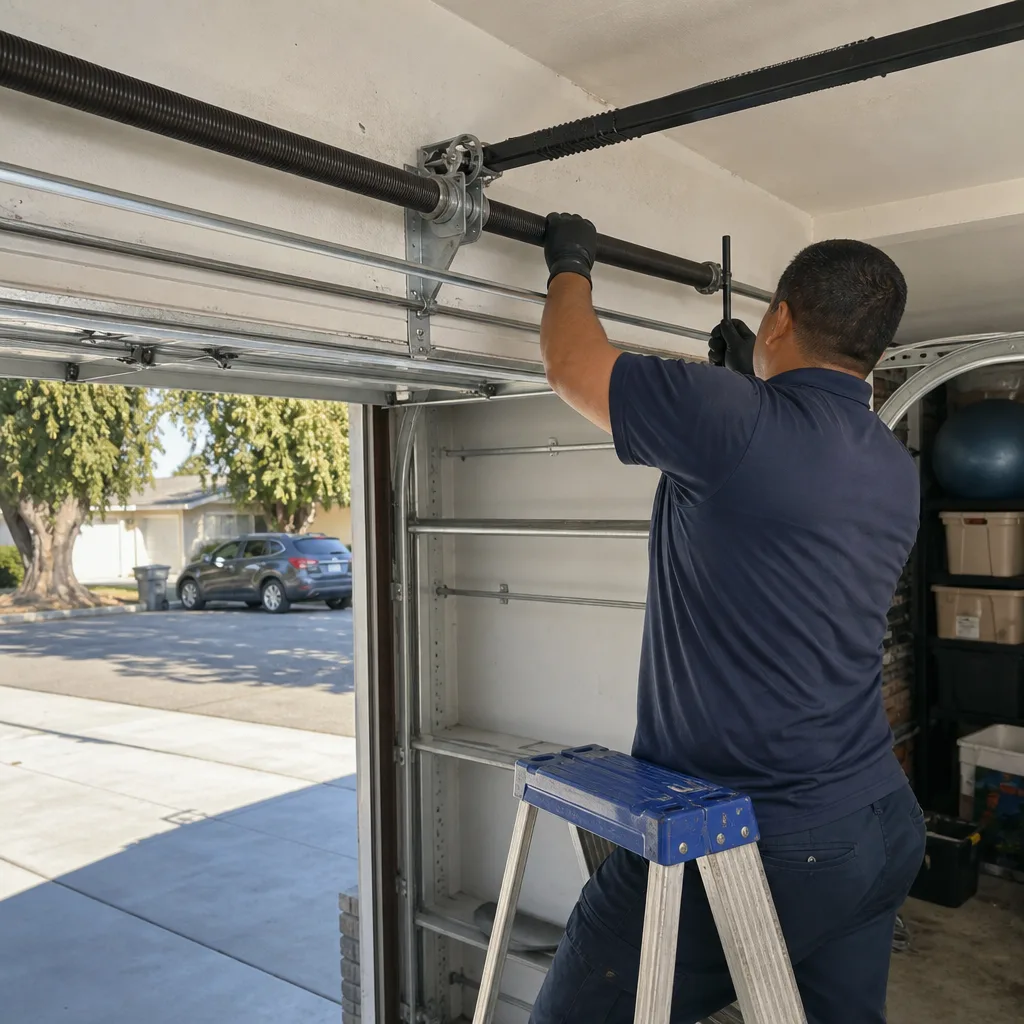
- Torsion spring replacement: Torsion springs store enormous energy. A spring that releases while you’re working on it can cause severe injury or death. This is the number one reason people end up in emergency rooms from garage doors. We don’t give step-by-step instructions for this, and neither should anyone else.
- Cable replacement: Cables work with the springs and carry the same tension. If a cable breaks while the spring is wound, the energy transfer can be violent.
- Track realignment or replacement: This requires precise measurements and often involves loosening and re-torquing structural bolts under load.
- Opener motor or logic board replacement: Electrical work on a device that connects to your home’s power and safety systems should be handled by someone who knows the specific brand’s wiring.
- Any repair on a door you use daily: If the door is your primary entry point and it’s malfunctioning, the risk of a temporary fix failing while you’re parked under it isn’t worth the money saved.
For a full breakdown of repair scope, see our Garage Door Repair in Los Angeles page.
What Garage Door Repair Actually Costs in Los Angeles
Los Angeles labor rates run higher than the national average, but parts costs are comparable. Here’s a realistic breakdown based on the LA market in 2025:
| Repair Item | Typical LA Range | Time on Site |
|---|---|---|
| Torsion spring replacement (single) | $180 – $340 | 45-90 minutes |
| Torsion spring replacement (double) | $280 – $480 | 1-2 hours |
| Cable replacement (pair) | $150 – $280 | 45-60 minutes |
| Roller replacement (full set) | $120 – $220 | 30-60 minutes |
| Track realignment | $125 – $250 | 1-2 hours |
| Opener motor or board repair | $160 – $350 | 1-3 hours |
| Full opener replacement (motor unit, labor) | $450 – $850 | 2-4 hours |
| Complete door replacement (materials + install) | $1,800 – $5,500+ | 1 day |
These ranges assume standard residential doors 7 to 8 feet tall and widely available parts. Custom sizes, wood doors, or unusual opener configurations push costs higher. Every reputable company in Los Angeles should quote the price before starting work and stand by that number. If a technician arrives and says the job costs more than the phone estimate without a clear reason, that’s a red flag. Call (866) 472-6497 for a free estimate on your specific system, and we’ll tell you the number before we touch anything.
Brand-Specific Quirks in Los Angeles Housing Stock
LA’s housing stock tells a story through its garage equipment. Mid-century homes built in the 1950s and 1960s have long since had their original doors replaced, usually with whatever was on sale at the local home improvement warehouse that decade. The result is a patchwork of brands across the city, and each has its own failure patterns.
Chamberlain and LiftMaster openers dominate LA garages because they’ve been the default at Home Depot and through professional installers for three decades. The newer Chamberlain and LiftMaster units with MyQ connectivity are solid, but their wall control wiring and logic boards are more sensitive to power fluctuation than older mechanical units. During LA heat waves, we get calls from Valley homeowners whose openers stopped responding to the wall button or the app. The fix is often a quick board reset or sensor alignment, but knowing which generation of board you have matters.
Genie openers are common in condos and townhomes built in the 1980s and 1990s along the I-405 corridor. Genie’s older screw-drive models are durable but loud, and their carriage assemblies wear out after years of use. The parts are still available, and we service Genie units regularly, but the repair often requires matching the exact model’s carriage style.
Clopay doors are the most common residential door brand in Los Angeles, especially in newer construction and remodels in the South Bay and Westside. Clopay makes a broad line, and the lower-gauge steel on entry-level models dents more easily from basketballs and parking mishaps. Their higher-end insulated doors hold up well to Valley heat.
Wayne Dalton and Amarr doors appear frequently in track homes and HOA communities in the San Fernando Valley and Santa Clarita Valley. Wayne Dalton’s TorqueMaster spring system is a sealed unit that feels different to service than a standard torsion setup. A technician who knows the difference between a TorqueMaster cartridge and a conventional spring will diagnose it correctly the first time.
What matters is that the company you call has seen your brand before this week. We work on all eight majors: LiftMaster, Chamberlain, Genie, Clopay, Amarr, Wayne Dalton, Craftsman, and Raynor. If a company says “we don’t really see that brand,” you’re talking to the wrong company.
For opener-specific diagnostics, see our Garage Door Opener Repair in Los Angeles page.
Repair or Replace: A Decision Framework for LA Homeowners
LA is a high-equity market. A garage door is visible from the street, and in neighborhoods where homes routinely sell for $1 million to $3 million, an old, dented, sagging door chips away at curb appeal every single day. But that doesn’t mean every repair call should turn into a replacement pitch. For help deciding, read our DIY vs Professional Garage Door: The Los Angeles Homeowner’s Decision Guide. Here’s the framework we use with homeowners:
- Is the door structurally sound? If the panels are cracked, sagging at the seams, or rusted through, replacement is the honest answer. No spring or cable repair fixes a compromised panel.
- What’s the total repair cost as a percentage of replacement? If repairs total more than 50 percent of a new door’s installed cost, replacement usually makes more financial sense, especially in Los Angeles where property values make curb appeal investments recoverable at sale.
- How old is the opener? Openers last 10 to 15 years in LA’s heat. If the opener is 12 years old and the door needs $300 in mechanical work, you’re chasing a moving target. A new motor beside an old door, or a new door over an old motor, often creates mismatched performance.
- Is the current door insulated? Valley garages get brutally hot. If your door is a non-insulated steel panel and you use the garage as a workspace or have a bedroom above it, an insulated replacement door changes your daily experience.
- Does the door style match the house? Los Angeles has a distinct architectural range: Spanish Revival, Mid-Century Modern, California Bungalow, Contemporary. A generic builder-grade door on a restored 1920s bungalow is a visual mismatch that buyers notice.
Repair or replace, we’ll tell you which one actually makes sense. That’s the only way to operate in a city where every service call has a real cost-of-living context behind it.
For new door options and pricing, see our Garage Door Installation in Los Angeles page.
California Contractor Law, Permits, and Your Rights
California requires any contractor performing work valued at $500 or more to hold a contractor’s license issued by the Contractors State License Board (CSLB). Garage door repair companies fall under this requirement. Before you hire, verify the company’s CSLB license is active and check that it matches the business name on their invoice. Unlicensed handymen doing garage door work in Los Angeles are common and frequently undercut licensed shops on price, but you lose your legal recourse if the work damages your home or the technician walks off mid-repair.
On the permit question: replacing a garage door in Los Angeles does not typically require a building permit if you’re swapping a door for a door of the same size and the opening isn’t being modified. If you’re enlarging the opening, adding windows, or changing the structural framing, the City of Los Angeles Department of Building and Safety (LADBS) will likely want a permit. Most straightforward replacements are done without pulling permits, and that’s compliant as long as the opening’s dimensions don’t change. HOA communities, especially in newer developments, may have their own architectural review requirements before you change the door’s appearance or material.
Ask for proof of licensing and insurance before work starts. A company that hesitates on either is telling you something useful.
The LA Maintenance Schedule That Prevents Most Breakdowns
Most garage door failures are predictable with the right maintenance cadence. In Los Angeles, that cadence is different than elsewhere in the country.
Every 3 Months (All LA Homes)
- Wipe down photo eye sensors with a dry microfiber cloth. Ash and road dust accumulate fast.
- Test the auto-reverse function. Place a 2×4 on the ground under the door’s path and close it. The door should reverse on contact.
- Listen. A door that groans, squeals, or grinds is telling you something specific about a roller, hinge, or spring.
Every 6 Months (Coastal and Hillside Homes)
- Inspect cables for rust staining, fraying, or broken strands.
- Check all hinge and track bolts for corrosion. Marine air eats fasteners.
- Lubricate hinges, rollers, and springs with spray lithium grease.
Annually (Every LA Home)
- Full inspection of springs, cables, rollers, hinges, and tracks by a technician who knows your brand.
- Opener force and limit adjustment check.
- Door balance test: disconnect the opener and lift the door manually. It should stay in place at knee height. If it falls, springs are losing tension.
This schedule prevents most of the emergency calls we get. The homeowners who follow it aren’t the ones calling at 7am on a Tuesday with a door that won’t lift.
Common Mistakes to Avoid
- Using WD-40 on rollers and springs. WD-40 is a solvent, not a lubricant. It strips away grease and leaves the metal unprotected, which accelerates corrosion in coastal Los Angeles air. Use lithium grease or silicone spray.
- Continuing to use a door after a spring breaks. Every cycle with one broken spring puts uneven load on the opener and the remaining spring. That turns a $250 spring replacement into a $700 opener failure.
- Hiring based on price alone. Low bids in LA often mean unlicensed labor, reused parts, or a “repair” that doesn’t address the underlying problem. You’ll pay twice.
- Ignoring a noisy door. That squeak is a roller bearing failing. Replacing a $15 roller early prevents a $200 track repair later.
- Trying to replace a torsion spring with YouTube instructions. We’ve seen the injuries from this. It is the single most dangerous home repair task in existence by injury rate. No video justifies the risk.
- Replacing the door but keeping a 15-year-old opener. The new door’s weight and balance profile may not match the old motor’s lift capacity or travel settings. You’ll be back in service within months.
- Neglecting ash cleanup during fire season. Wildfire ash is corrosive and abrasive. Letting it sit in your tracks and on your cables for months shortens hardware life measurably. Rinse it off with water and dry thoroughly.
When to Call a Professional
Call a professional the day you notice any of these: a snapped spring, a frayed cable, a door that won’t stay up, a door that reverses unexpectedly mid-cycle, visible track damage, or an opener that runs but doesn’t move the door. Any of these means the system is under stress and likely to fail completely, usually at the worst possible time. Do not operate the door manually after a spring or cable failure unless you know exactly what you’re doing.
Chaparral Garage Door Repair offers free estimates across Los Angeles. Our technicians work on the eight major residential brands and arrive with parts for the most common failures stocked on the truck. Call (866) 472-6497 and we’ll diagnose the issue over the phone, give you a price range before we arrive, and confirm the exact cost before any work begins.
Frequently Asked Questions
Torsion spring replacement in Los Angeles runs $180 to $340 for a single spring and $280 to $480 for a pair, including labor. The spread depends on spring size, door weight, and whether the technician needs to replace additional hardware while on site. Call (866) 472-6497 for an exact quote: estimates are free, and the price is locked before work starts.
Most spring, cable, roller, and track repairs are completed the same day in Los Angeles because the parts are common and we stock them on the truck. Opener replacements and full door replacements usually require a follow-up visit to measure and order. Call (866) 472-6497 to check same-day availability in your area.
No. The price is quoted and agreed before any work starts. If we find additional damage during the repair, we stop, show you what we found, and give you a new quote before proceeding. You approve every dollar before we spend it. Call (866) 472-6497 for a free estimate.
We work on LiftMaster, Chamberlain, Genie, Clopay, Amarr, Wayne Dalton, Craftsman, and Raynor systems. If your opener or door falls outside that list, we’ll tell you on the phone before scheduling a visit.
Replacing a garage door with another door of the same size and opening does not require a City of Los Angeles building permit. Modifying the opening size, adding windows to a structural panel, or changing framing will trigger LADBS permit requirements. HOA communities may have separate architectural approval processes.
Annual inspection is the minimum for Los Angeles homes, with additional attention every 3 to 6 months if you live near the coast, in the Valley heat corridor, or in a hillside area with settling soil. The climate here punishes hardware faster than national averages assume. Call (866) 472-6497 to schedule an inspection.
The Bottom Line
Your garage door is a system of components that work together, and in Los Angeles, the environment works against all of them at once. Coastal salt, valley heat, and citywide wildfire ash create failure patterns that generic guides never address. The key is knowing what to inspect, what to leave alone, and who to call when a spring snaps or a cable lets go. Find more guides & resources on our blog. Repair before replacement when the numbers make sense; replace when the door’s structural integrity or your home’s equity demands it. And above all, don’t touch anything under tension. Garage doors, exclusively. That’s what we do, and we’re the ones to call when yours stops doing what it should.
Written by the team at Chaparral Garage Door Repair, serving Los Angeles since 2018. Chaparral Garage Door Repair home
See the difference
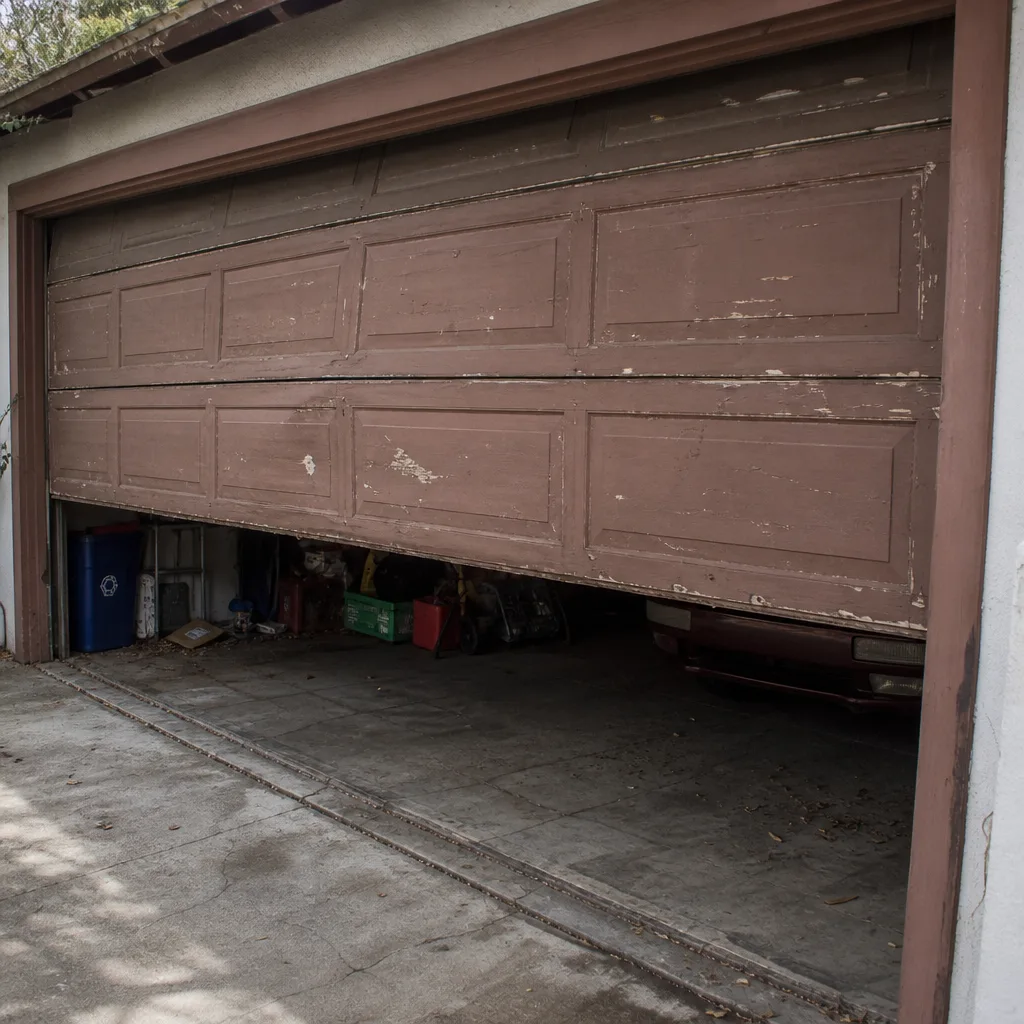 Before
 After
 Before
 After
 Before
 After