
Last updated October 30, 2026
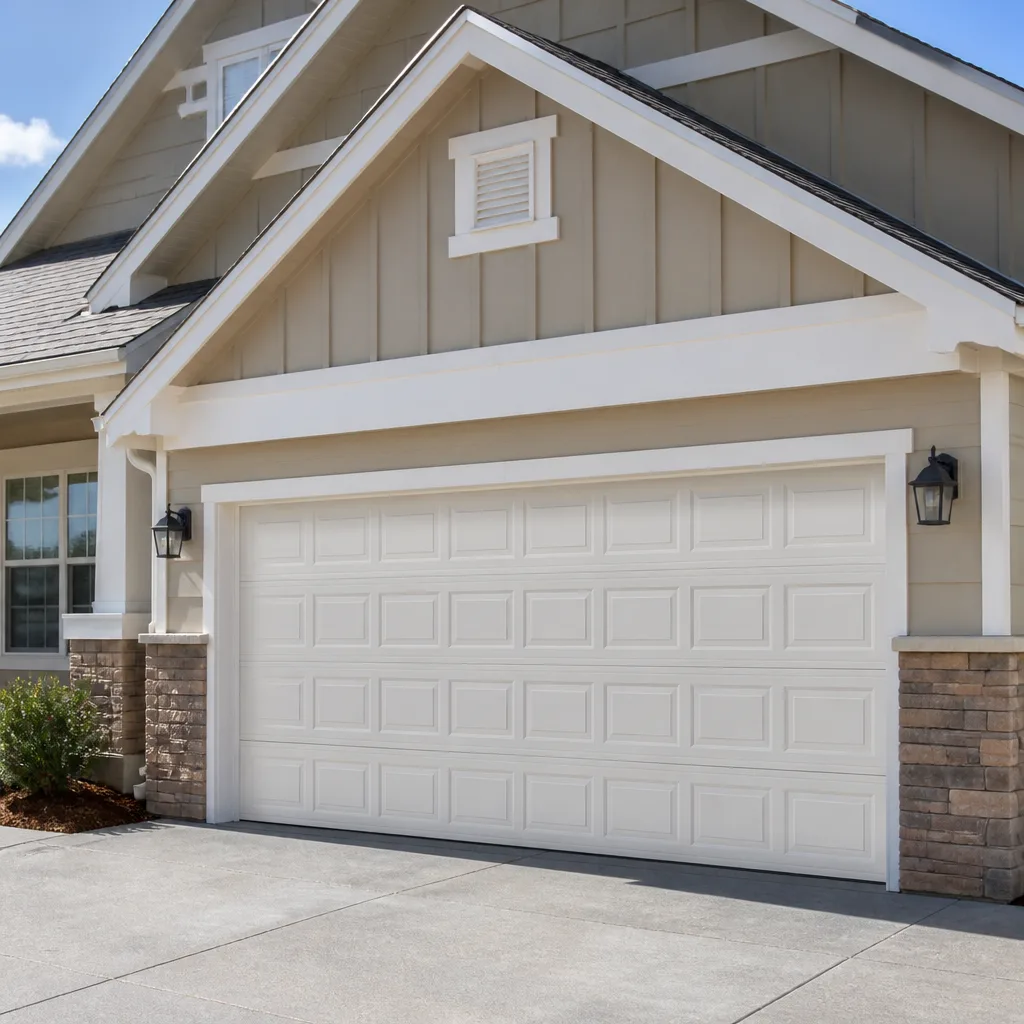 Raised-panel steel
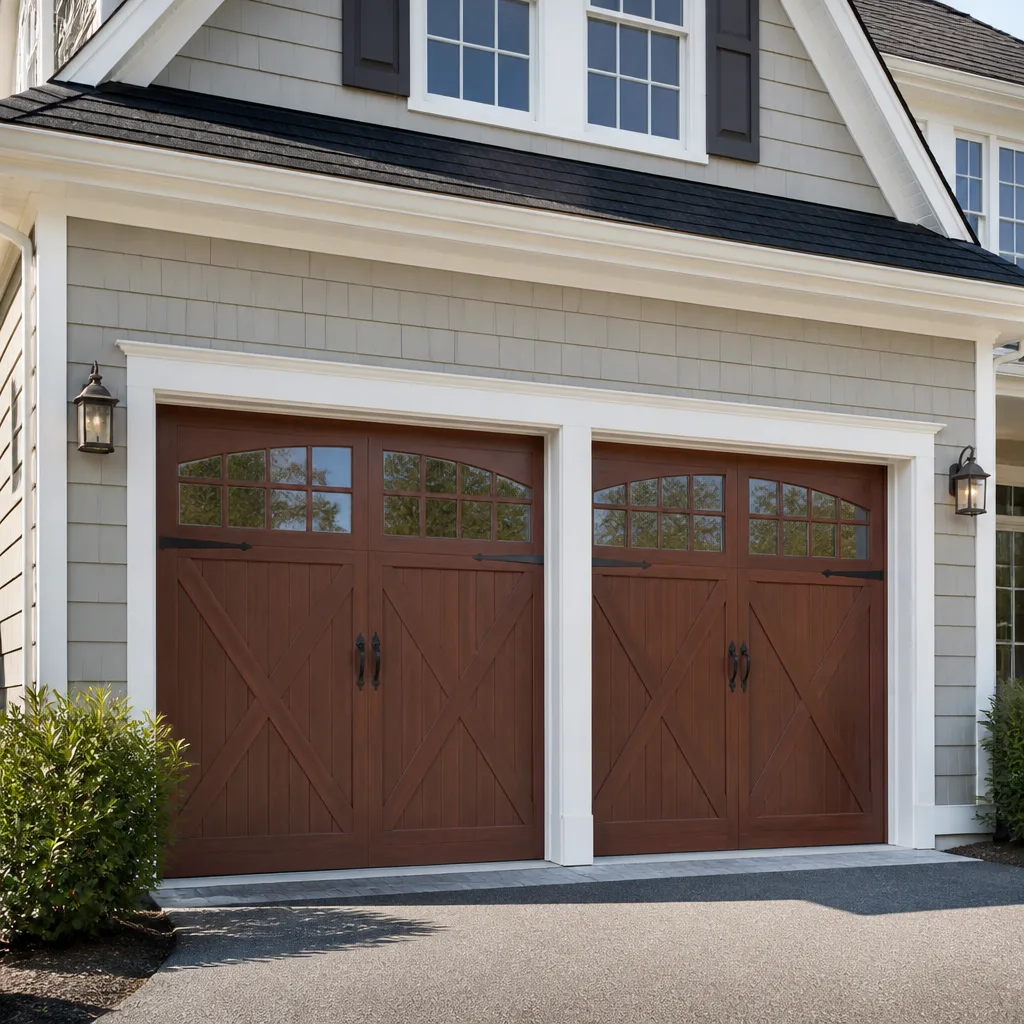 Carriage house
 Modern flush
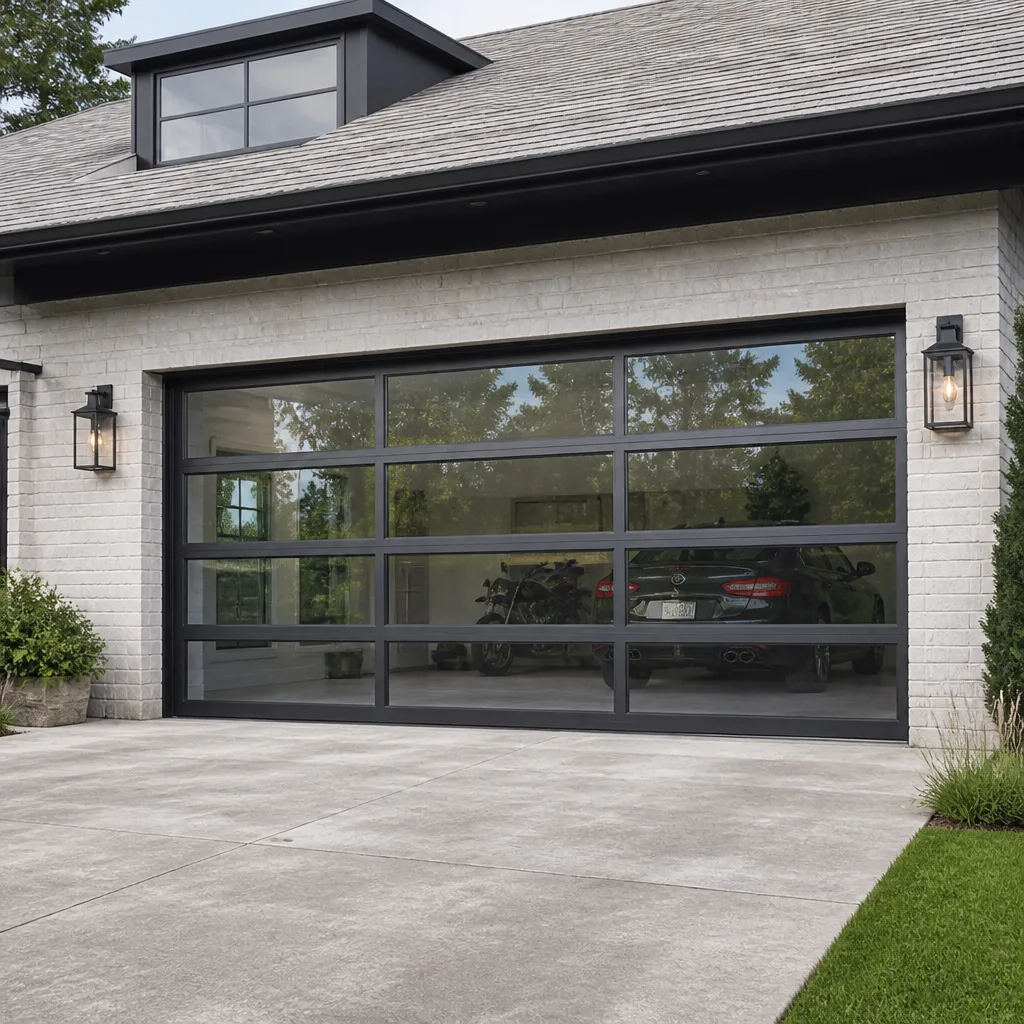 Full-view glass
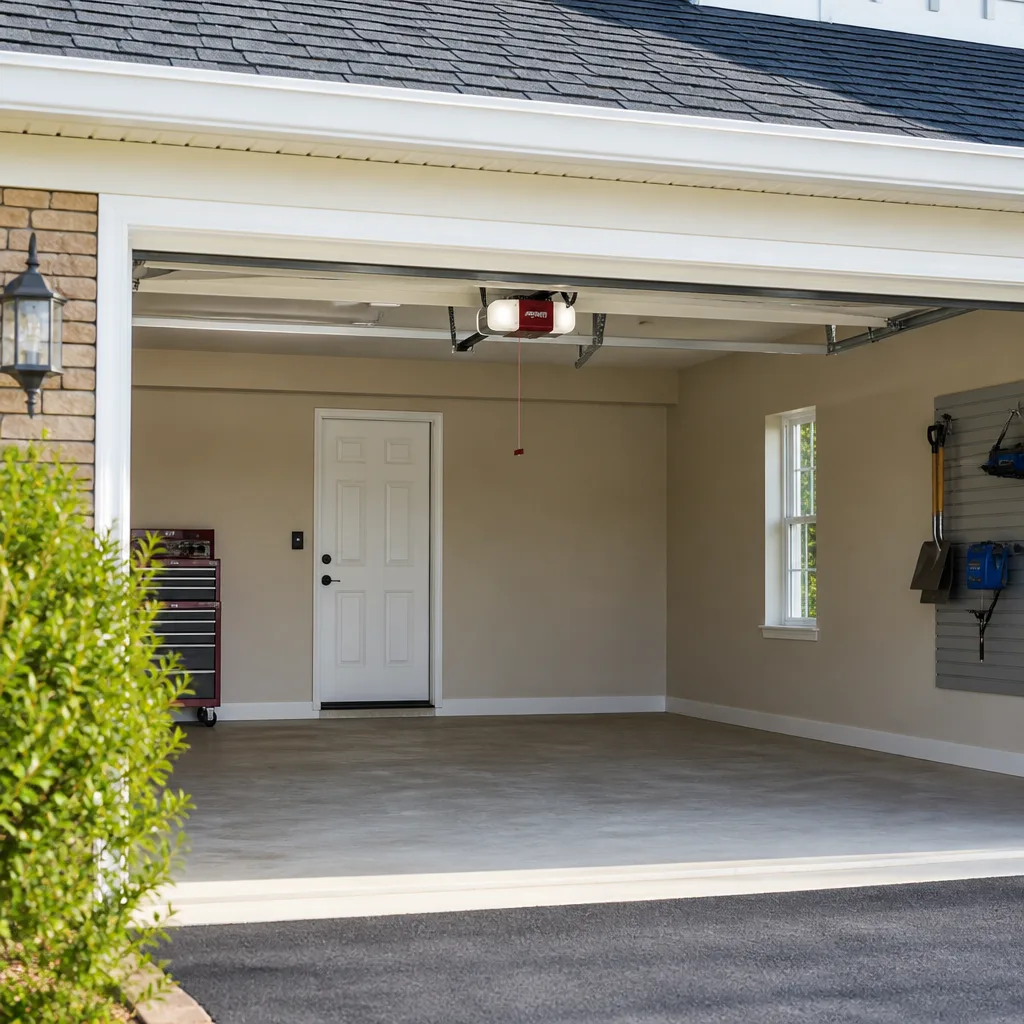 LiftMaster openers
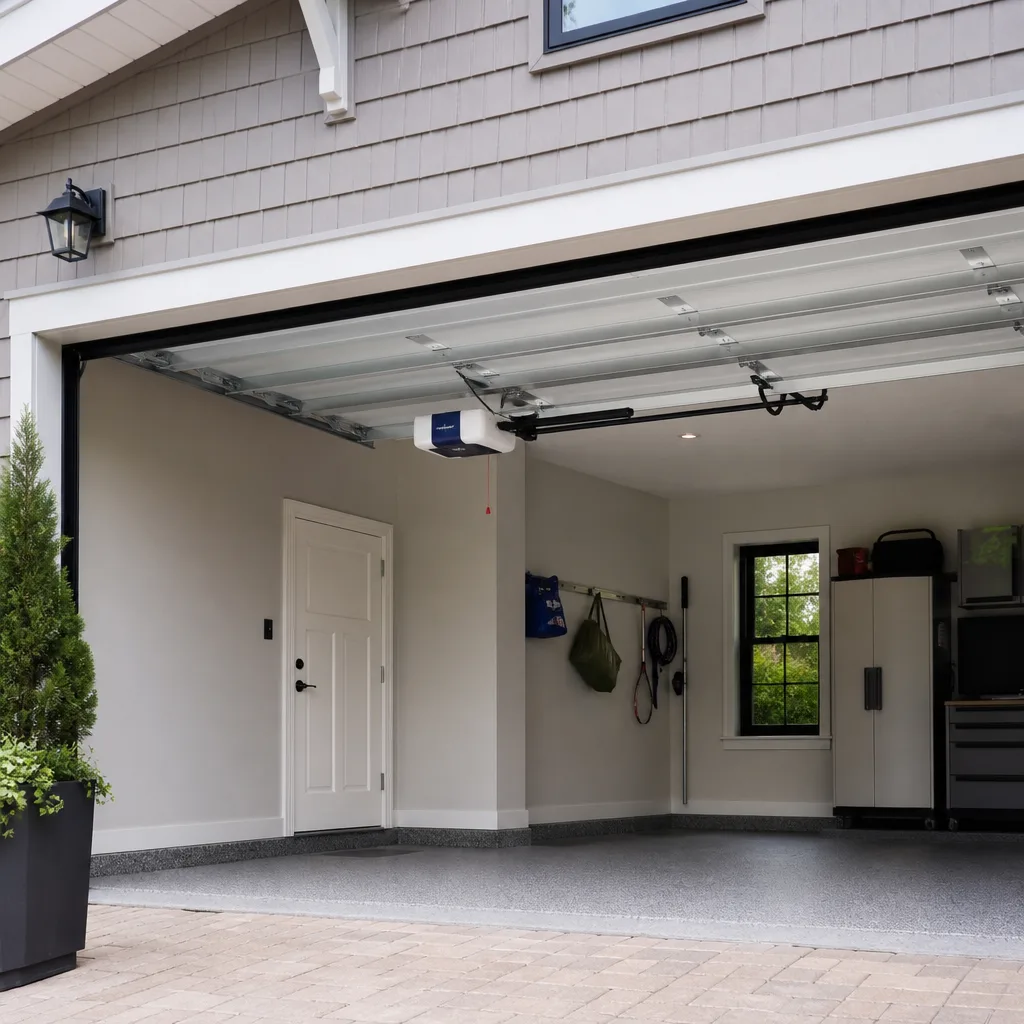 Chamberlain openers
Full 25-point door and opener safety check with every visit - springs, cables, rollers, tracks, and your LiftMaster or Chamberlain opener included
You get a price before we start. It does not change when the truck arrives.
Get your free estimateGarage Door Emergency Preparedness Guide for Los Angeles Homes
Every few years, a wind event or earthquake shakes Los Angeles hard enough to remind us that the city sits on active fault lines, and that wildfire season now stretches nearly year-round. Yet most homeowners never think about the largest moving object in their house until it refuses to move. Your garage door weighs anywhere from 130 to 400 pounds, runs on springs under enormous tension, and in many older Los Angeles homes it’s the only way to get a car out when the power fails. This guide covers the preparation steps that take under an hour and could save you hours of delay when an evacuation order comes.
Quick Answer
Garage door emergency preparedness in Los Angeles means knowing how to operate your door manually during a power outage, inspecting it after earthquakes, and having a battery backup or pre-planned manual release strategy before wildfire season or a major storm. Most Los Angeles homeowners have never tested their door’s manual release, and that five-minute check is the single highest-impact step you can take today. We’ll walk through each scenario and the specific checks that matter for Southern California homes.
Styles & brands we work with
Table of Contents
- How to Use the Manual Release Cord Correctly
- Battery Backup Openers and LA Power Outage Scenarios
- Post-Earthquake Door Inspection Protocol
- Wildfire Evacuation Prep for Your Garage Door
- Emergency Service Reality in Los Angeles During Disasters
- Safe Temporary Fixes While You Wait for a Technician
- A Monthly 10-Minute Garage Door Readiness Checklist
- Common Mistakes to Avoid
How to Use the Manual Release Cord Correctly
The red cord hanging from your opener rail is not a decoration. It’s the emergency disconnect that separates your door from the motorized carriage so you can lift the door by hand. In Los Angeles, where rolling blackouts and earthquake-related outages happen without warning, this cord is your primary backup. But there’s a right way and a wrong way to pull it, and the wrong way can send a door crashing down.
The Correct Sequence
- Make sure the door is fully closed. Pulling the release while the door is open is the single most dangerous mistake homeowners make. If the door is open when you pull the cord, the spring tension may not be balanced for manual operation, and the door can slam downward.
- Pull the red cord down and toward the door. You’ll hear a click as the carriage disengages from the chain or belt. The cord hangs from a release mechanism on the trolley, not from the opener motor itself.
- Lift the door manually using the handles or the bottom edge. A properly balanced door should lift smoothly with one hand and stay open around waist height. If it feels heavy, sticks, or wants to drop, the springs need attention from a professional.
- To re-engage, pull the cord again while the door is closed. Run the opener once and it will either reconnect automatically or you’ll hear a click as the carriage re-locks onto the chain or belt.
The One Mistake That Causes Doors to Drop
Pulling the release cord when the door is not fully down is the classic error. We’ve seen doors in Los Angeles neighborhoods like Sherman Oaks and Eagle Rock drop hard enough to bend lower panels and crack concrete. When the door is up and you pull the cord, you’re disconnecting a door that’s under spring tension at the top of its travel, and gravity takes over at whatever speed the springs allow. If those springs are old or unbalanced, that speed is fast and destructive. Always check that the door is closed before pulling the release.
The manual release works on all major brands, from Chamberlain and LiftMaster to Genie and Craftsman. The cord looks a little different on each, but the physics are the same. If you’re not sure where your cord is, run the opener and watch the rail above the door; the cord hangs from the moving carriage. Test it now, while the sun is out and there’s no emergency, rather than discovering it for the first time in the dark during a blackout in Los Angeles.
Battery Backup Openers and LA Power Outage Scenarios
A battery backup opener runs your garage door on stored power when the grid goes down. Most modern LiftMaster and Chamberlain models offer this as a built-in or add-on feature. But Los Angeles homeowners should understand exactly what these backups can and cannot do, because the city’s outages come in two very different flavors.
Which Scenarios Battery Backups Handle
- Brief rolling blackouts: When Southern California Edison or LADWP cycles power off for an hour or two during high-demand heat waves, a battery backup works perfectly. You get roughly 20 to 50 open-and-close cycles on a fully charged unit, depending on the brand and battery age.
- Localized outages: A transformer failure in your neighborhood, a car hitting a pole on Ventura Boulevard, or grid maintenance in the Hollywood Hills. Again, the backup bridges the gap until utility crews restore power.
- Wind-related shutoffs: During Santa Ana wind events, utilities sometimes proactively cut power to reduce wildfire ignition risk, particularly in canyon neighborhoods like Laurel Canyon, Topanga, or parts of the San Fernando Valley. A battery backup lets you get your car out during these shutoffs without manual lifting.
What Battery Backups Do NOT Handle
- Extended multi-day grid failure: A major earthquake along the San Andreas or a catastrophic wildfire could knock out power for days. Once your backup battery drains, it’s dead until power returns. You’re back to the manual release cord.
- Old or failed batteries: Backup batteries degrade after 3 to 5 years, and many Los Angeles homeowners have backups that test fine but fail under actual load. Batteries should be tested every six months and replaced proactively.
- Opener or door damage: If the earthquake or falling debris damages your door tracks, springs, or opener unit, a battery backup doesn’t fix mechanical problems. Power means nothing if the door can’t physically move.
Our team at Chaparral Garage Door Repair regularly finds backup batteries that are several years past their service life in homes across Los Angeles. The homeowner assumes they’re protected, but the first real outage proves otherwise. If you have a battery backup, test it now by unplugging the opener and running the door once. If the door moves slowly or not at all, the battery needs replacement. And if your opener doesn’t have a backup, Garage Door Opener Repair in Los Angeles is where we can assess your current unit and recommend a backup-equipped model if it makes sense for your home.
Post-Earthquake Door Inspection Protocol
Los Angeles has not had a major urban earthquake since Northridge in 1994, but the faults haven’t gone anywhere. After any significant shaking, your garage door should be inspected before you attempt to operate it, because earthquake forces shift frames, twist tracks, and stress opener mounting hardware in ways that aren’t visible from the street.
What to Check Before Operating the Door
- Inspect the door from outside first. Look at the vertical tracks on both sides. Are they still plumb, or do they lean or bow? A track that’s shifted even a quarter inch can bind the rollers and cause the door to jam mid-travel or derail entirely.
- Check the horizontal tracks and the back-hang hardware. Go inside the garage and look at the horizontal tracks above your head. Are the metal hangers that attach them to the ceiling still connected and unbent? In Northridge, many doors failed because the back-hang brackets pulled out of drywall ceilings.
- Look at the gap between the door and the frame. Walk to each side of the door and check whether the gap is consistent from top to bottom. A wider gap at the top means the frame has racked, which happens frequently in older Los Angeles homes with wood-framed garages.
- Examine the springs. Look for any gap in the spring coils, which indicates a broken or stretched spring. Torsion springs above the door and extension springs along the sides should look symmetrical and intact. Do not touch the springs; a visual check is enough to identify a problem.
- Test the opener mounting. If the opener motor unit hangs from the ceiling, check that the mounting straps or brackets are still tight and the unit hasn’t shifted. A loose opener can strip the gears or damage the door when it runs.
- Run the door once, slowly, with the opener. If everything above looks fine, open the door using the wall button, not the remote, so you can watch the entire travel. Stop immediately if you hear grinding, scraping, or uneven movement.
If you find any of these problems, leave the door alone and call a professional. Doors in this condition can go from “a little off” to fully derailed with one more cycle. We serve Los Angeles homeowners with Garage Door Repair in Los Angeles that addresses earthquake-related track, spring, and opener damage, and we routinely work on doors from Clopay, Amarr, Wayne Dalton, and other major brands.
Wildfire Evacuation Prep for Your Garage Door
The Saddleridge Fire in 2019 burned over 8,000 acres near Sylmar and forced mandatory evacuations for more than 100,000 Los Angeles residents. That same year, the Getty Fire put parts of Brentwood and the Sepulveda Pass under evacuation orders. In both events, residents reported struggling with garage doors that wouldn’t open after power had been cut, costing them precious minutes as they tried to leave. A functioning door isn’t enough; you need a plan.
Door-Related Steps for Your Evacuation Go-Bag Plan
- Know where your release cord is and have tested it. You should be able to find and pull the manual release cord by feel, in the dark, with your heart rate elevated. Practice once every few months until it’s automatic.
- Keep a flashlight near the garage interior door. Power often cuts before evacuation orders arrive. A $15 flashlight hanging by the door to the house removes the first obstacle: you can’t see the release cord.
- Stage your car so it can exit. In wildfire-prone areas like the San Gabriel foothills, Topanga Canyon, or portions of the Valley, back your car into the driveway so you can pull straight out. A garage door that fails becomes a much smaller problem if you don’t need to open it to get to your car in the first place.
- Write the manual release instructions on a laminated card. Attach it to the wall near the opener. In a smoke-filled garage with your family waiting in the car, you do not want to be reading the opener manual for the first time.
- If your opener is older and has no battery backup, consider upgrading. An opener with a battery backup, like certain models from LiftMaster and Chamberlain, will keep working even when LADWP or SCE cuts power in high-wind conditions. We install these regularly in the canyon and hillside neighborhoods where wildfire risk is highest.
Here’s a fact most Los Angeles homeowners don’t know: even a garage door that operates perfectly during normal conditions can bind if wildfire heat warps the door or if wind-driven debris clogs the tracks. Before an evacuation, you can’t fix a warped door, but you can make sure the manual release is tested, the tracks are clear, and your car is positioned to exit without the door if necessary. For Los Angeles homes considering a door upgrade specifically with fire season in mind, Garage Door Installation in Los Angeles covers modern doors with better insulation and wind resistance that hold up more reliably during high-wind events.
Emergency Service Reality in Los Angeles During Disasters
When a major event hits Los Angeles, whether it’s an earthquake, wildfire, or a citywide power failure, garage door service response times change dramatically. Normal repair calls might see same-day or next-day service, but during a disaster, technicians are in high demand and some parts of the city may be inaccessible due to road closures, evacuation zones, or damaged infrastructure.
What to Expect When You Call for Emergency Service
- Priority is given to doors that are completely inoperable. If your door is stuck shut and your car is trapped inside, that’s a true emergency. If the door operates manually but the opener is down, you’re in a lower priority tier.
- Technicians may need to coordinate with utility crews. If power is out in your area and the door has a mechanical problem too, a technician can still work on the mechanical side, but the opener won’t be testable until power returns.
- Parts availability can be delayed. Springs, cables, and track components are usually stocked on service vehicles, but during disaster periods, specific opener circuit boards or specialty parts for Raynor or Craftsman systems may need to be ordered.
- Travel times increase. Road closures, traffic signal outages, and detours through Los Angeles add significant time to every call. A tech who normally covers the Westside in 20 minutes might need an hour to reach a home in Brentwood or Pacific Palisades during a major event.
We’ve worked through enough Los Angeles emergencies to know that preparation beats last-minute calls. A homeowner who has tested their manual release and knows their door works by hand is in a dramatically better position than one whose first instinct is to call for service while their car sits trapped in the garage. That said, when you do need us, we’re here. Our team handles emergency repairs across the full range of residential systems, from LiftMaster and Chamberlain openers to Genie and Raynor units, and we carry the most common repair parts on our trucks.
Safe Temporary Fixes While You Wait for a Technician
Some garage door problems allow for safe, temporary DIY fixes that get you through a few hours or overnight while you wait for professional service in Los Angeles. Others should be left completely alone. Knowing which is which protects both your safety and your wallet.
Safe to Do Yourself
- Clearing debris from the tracks: If wind or earthquake shifting dropped leaves, twigs, or small stones into the vertical tracks, you can remove them with your hands or a vacuum. Do not bend the tracks; just clear what’s loose.
- Tightening loose handle hardware: If the interior or exterior handle is loose and rattling, tightening the screws with a screwdriver is safe and quick.
- Lubricating rollers and hinges with a spray lubricant: A dry, squeaky door often quiets down with proper lubrication on the rollers, hinges, and bearing plates. Use a silicone or lithium spray, not WD-40, which is a solvent and not a lasting lubricant.
- Realigning safety sensors: If the door won’t close and the sensor lights are blinking, wiping the lenses and gently re-aiming the sensors at each other can restore operation. This is a common problem on Chamberlain and LiftMaster systems and usually takes five minutes.
Do NOT Attempt Yourself
- Any work on springs: Torsion springs and extension springs are under enormous tension. A spring that lets go can cause severe injury or death. If you suspect a spring problem, leave the door alone.
- Cable repair or replacement: The cables work with the springs to lift the door. If a cable has snapped or come off the drum, attempting to rewind it without proper tools and training is dangerous.
- Track bending or straightening: If a track is bent, you cannot safely bend it back with hand tools. The door will bind and could derail, which turns a $200 repair into a $600 replacement.
- Opener motor or circuit board work: Modern openers contain capacitors and sensitive electronics. Unplug the unit and call a professional if you smell burning, hear grinding gears, or see smoke.
Our experience across Los Angeles, from Mid-City to the foothills, is that the most common temporary fix needed is the manual release. We hear it constantly: “I didn’t know I could open the door by hand.” You can, and knowing that fact changes an emergency into an inconvenience. For everything else, a professional evaluation is safer and usually cheaper than fixing a DIY mistake. Reach Chaparral Garage Door Repair home for more on how we approach repairs with upfront, transparent work.
A Monthly 10-Minute Garage Door Readiness Checklist
Emergency preparedness is not a one-time project. It’s a habit, and the monthly checklist below takes less time than a coffee run. We recommend Los Angeles homeowners run through it on the first Saturday of every month, when you’re already thinking about household maintenance.
- Test the manual release. Close the door, pull the release cord, lift the door by hand, lower it, re-engage the opener, and run one full cycle. Two minutes.
- Inspect the springs visually. Look for gaps in torsion springs or stretched extension springs. Five seconds.
- Check the safety sensors. Wave a broom handle through the sensor beam while the door is closing. The door should reverse. Thirty seconds.
- Listen for unusual sounds. Run the door and listen for grinding, squealing, or banging. A noisy door is a door telling you something, and catching it early prevents emergency calls later. One minute.
- Check the balance. With the door disconnected via the manual release, lift it halfway. It should stay put. If it drops or rises, the springs are out of balance and need professional adjustment. Two minutes.
- Clear the tracks. Wipe down the vertical tracks with a dry rag and remove any spider webs, leaves, or dirt. One minute.
- Test your battery backup, if you have one. Unplug the opener and run the door once on battery. If it’s weak, schedule a replacement. Two minutes.
- Verify your flashlight is in place and working. Thirty seconds.
This checklist catches the majority of problems that would otherwise become emergencies during a power outage, earthquake, or evacuation. And if you do find something wrong, the best time to call us is during normal operations, not during the next disaster, when every Los Angeles garage door company is running triage.
Common Mistakes to Avoid
- Pulling the manual release cord while the door is open. This is the number one cause of dropped doors we see. The door must be fully closed before you pull the red cord. When it’s open and you pull, the springs can’t hold the door, and it falls.
- Assuming the opener has a battery backup because it’s new. Not all new openers include battery backup. It’s an optional feature on many models, and in Los Angeles, where wildfire-related public safety power shutoffs are a growing reality, this detail matters.
- Neglecting the springs until they break. Springs have a lifespan measured in cycles, not years, and Los Angeles homeowners who use the garage as the primary entrance wear them out faster. A broken spring is an emergency; a worn spring is a $180 scheduled replacement.
- Testing the door only during daylight and calm conditions. Emergencies happen in the dark, in the rain, and under stress. Practice your manual release drill in the dark at least once so you know you can do it by feel.
- Ignoring a noisy door. Squeaks and rattles are rarely self-healing. In our experience across Los Angeles, the door that screams for months is the one that fails during the next windstorm or earthquake.
- Leaving evacuation planning until an order arrives. By the time the reverse-911 call comes, you have minutes, not hours. The manual release practice, the staged car, the flashlight by the door: all of that has to be in place beforehand.
- Attempting spring or cable work as a DIY project. These are the injuries we hear about from homeowners who thought a YouTube video was enough. It’s not, and the hospital bill is higher than any service call.
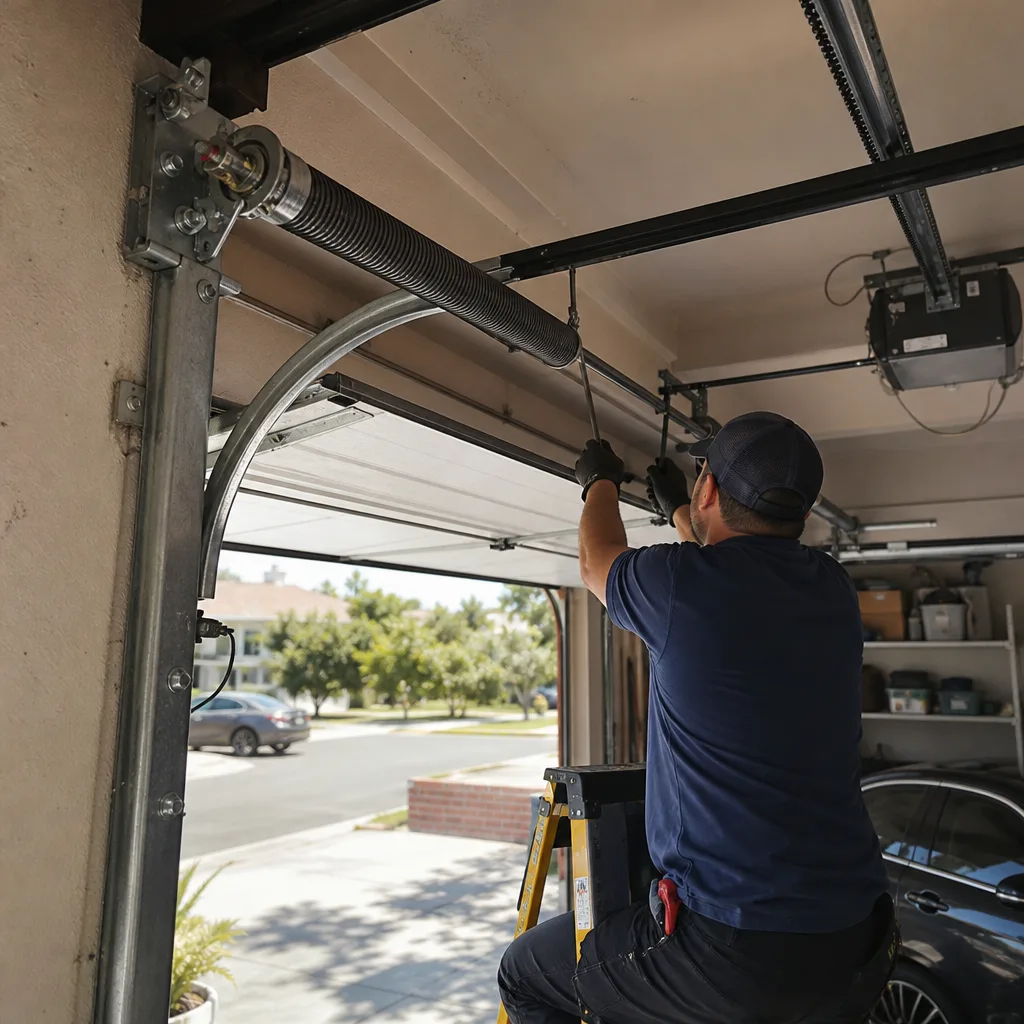
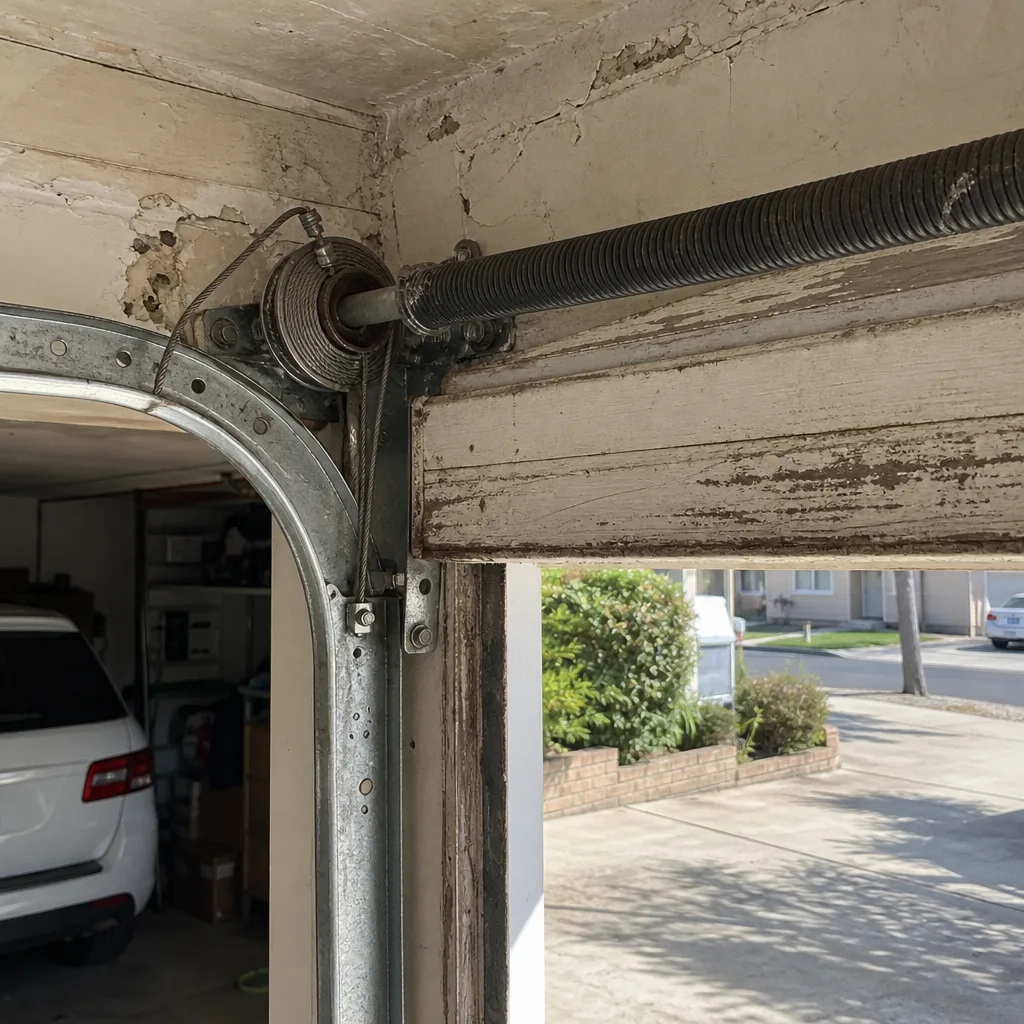
See the difference
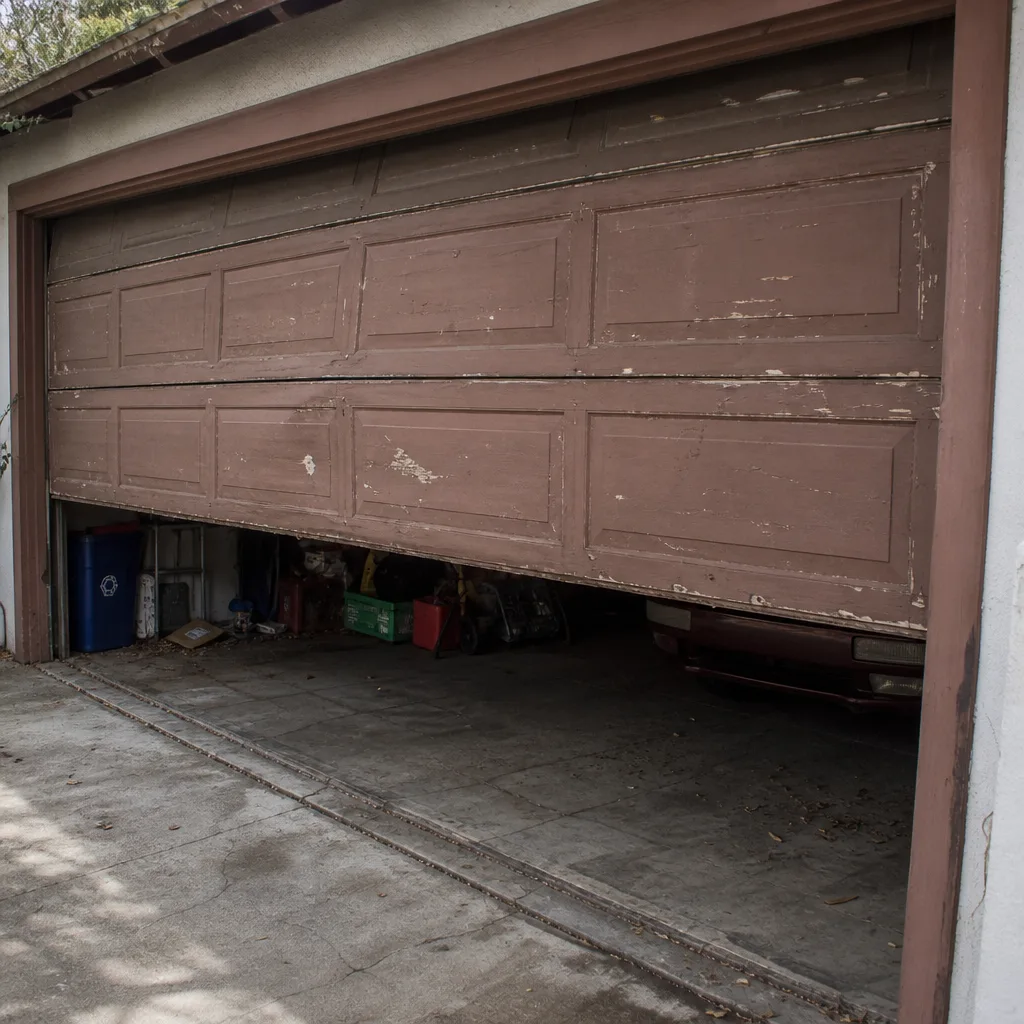 Before
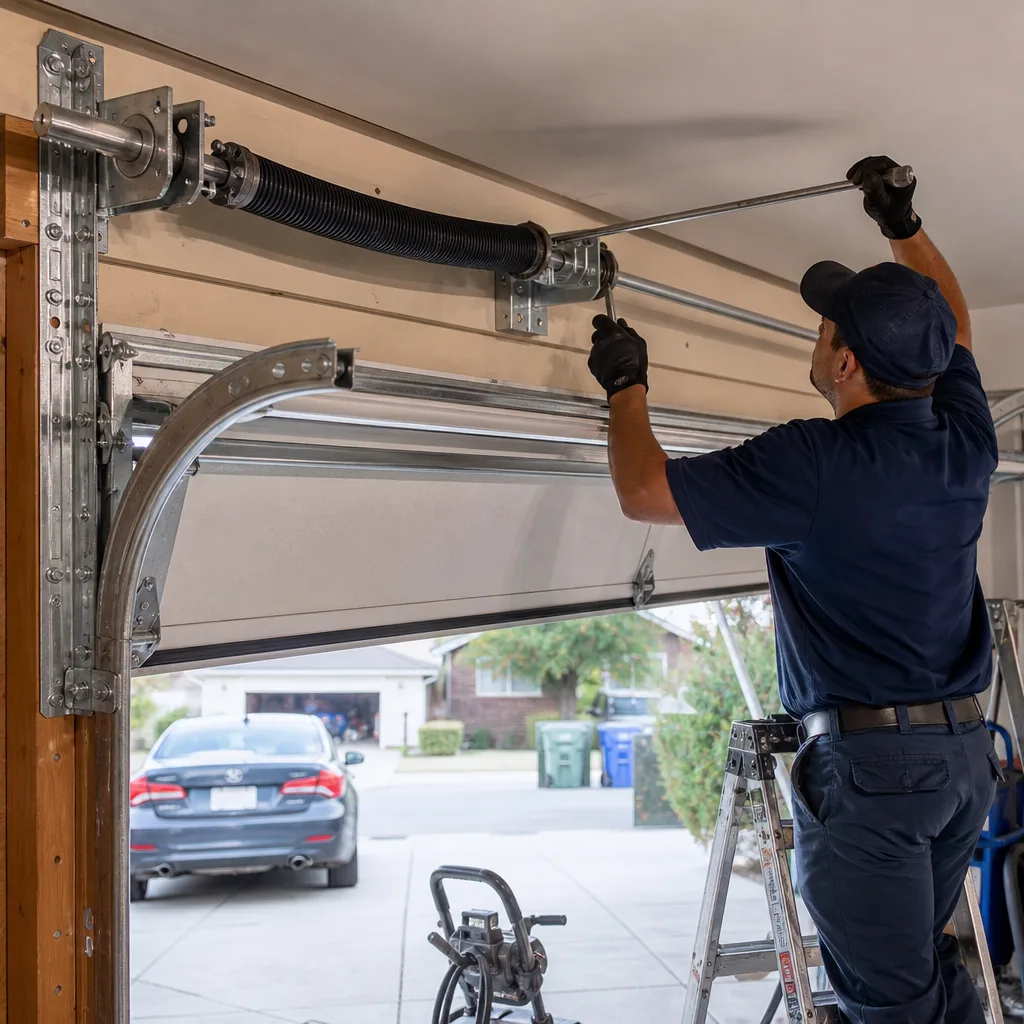 After
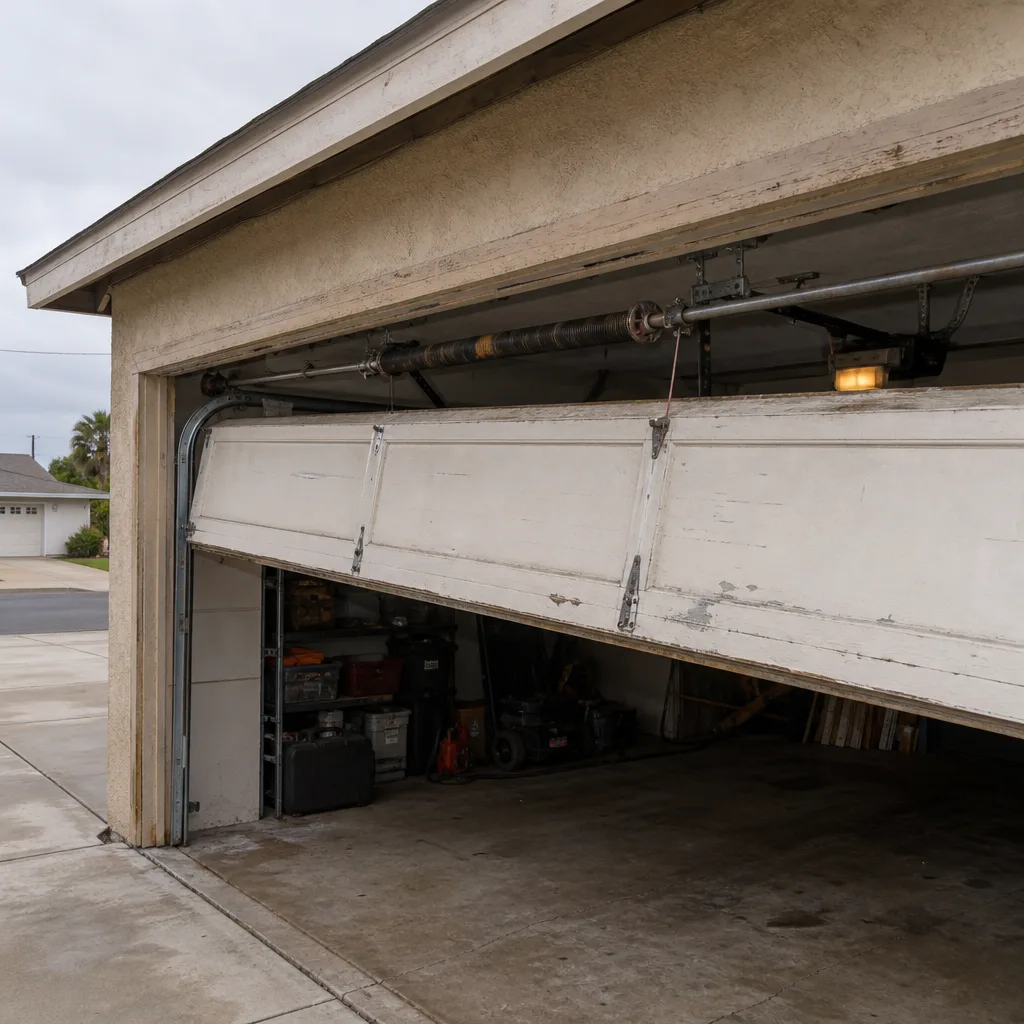 Before
 After
 Before
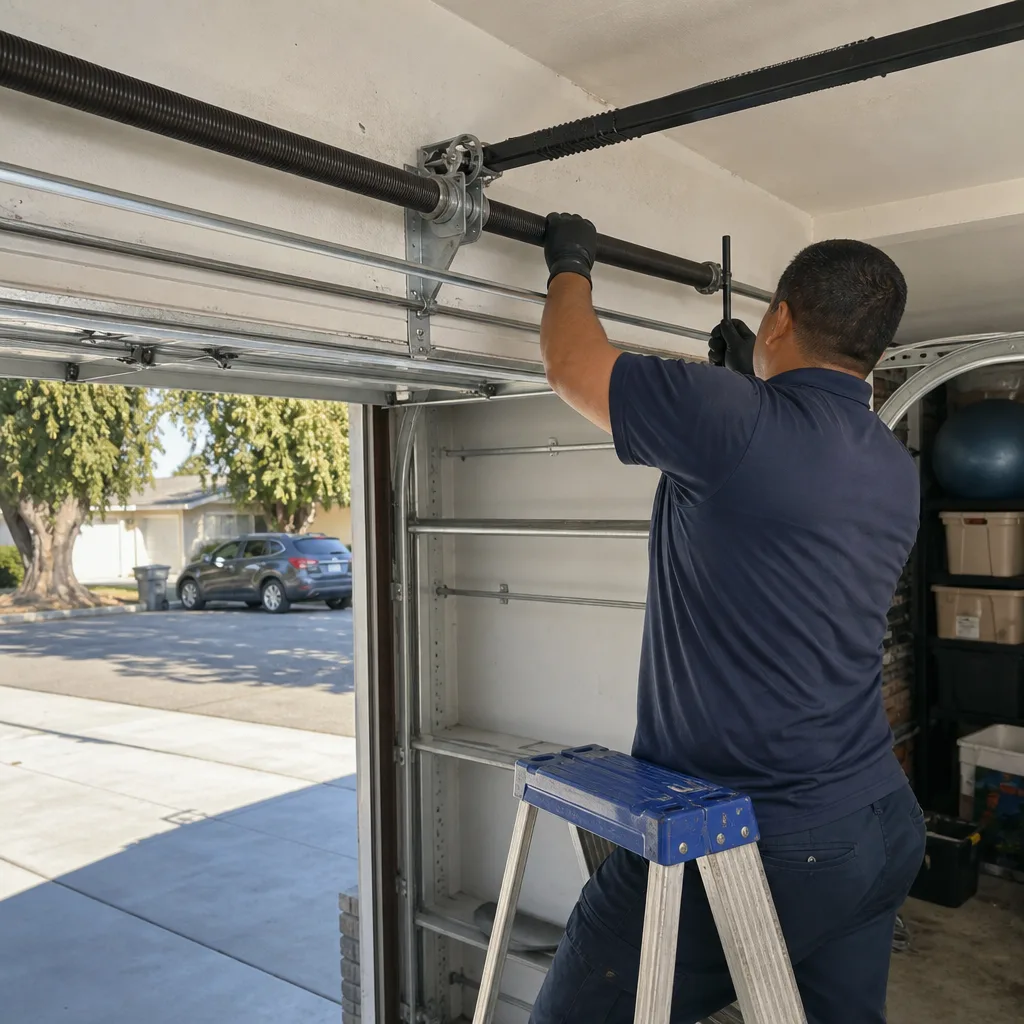 After
When to Call a Professional
Some garage door problems are safety issues that should never be handled by a homeowner. If you see a visible gap in a torsion spring, hear a loud bang and find the door won’t lift, or notice the door hanging unevenly from the tracks, stop using it immediately. The same goes for any cable that has come off its drum, any track that has bent from earthquake or impact damage, and any opener that smells like burning plastic. These are repair scenarios where the risk of injury outweighs any cost savings from DIY. Chaparral Garage Door Repair offers free estimates in Los Angeles – call (866) 472-6497 and we’ll assess your door honestly. If it can be repaired, we’ll quote the repair. If replacement makes more sense, we’ll tell you that instead. Your door’s job is to keep your home secure and your family able to leave when it matters, and we take that seriously.
Frequently Asked Questions
Pull the red manual release cord hanging from the opener rail while the door is fully closed, then lift the door by hand using the bottom edge or handles. The door should lift smoothly if the springs are in good condition. If you’ve never done this, practice it now rather than during an actual Los Angeles power outage. Call (866) 472-6497 if your door feels heavy or won’t stay up when released.
After any significant earthquake, inspect the tracks, springs, and opener mounting before running the door, because shifting can bind rollers or derail the door entirely. Run one slow cycle and stop immediately if you hear grinding or see uneven movement. Post-earthquake door inspections are a standard part of our Garage Door Repair in Los Angeles work, and we address track, spring, and opener damage from seismic events regularly.
Garage door emergency repair in Los Angeles typically ranges from $150 to $450 depending on the problem, with spring replacement on the lower end and track or opener replacement higher. We quote every price before any work begins, so you’ll never face a surprise invoice. Call (866) 472-6497 for an exact quote, and estimates are free.
A standard garage door opener cannot work without electricity, but an opener with a battery backup can run for 20 to 50 cycles on stored power. During Los Angeles blackouts or wildfire-related power shutoffs, a battery backup lets you operate the door normally until the battery drains. If your opener lacks a backup, you’ll need the manual release cord to open the door by hand.
If your current door is warped, rusted, or operates unreliably, replacing it before wildfire season means you won’t be dealing with a failure during an evacuation. Modern doors hold up better to high winds and heat than older wooden or uninsulated models. Our Garage Door Installation in Los Angeles service covers replacement doors from brands we work on every day, with free measure and written pricing.
Our Los Angeles service vehicles carry the most common repair parts, including torsion and extension springs, cables, rollers, hinges, and sensors, so most repairs are completed same-day. Less common parts, like specific opener circuit boards for Raynor or Craftsman units, may need to be ordered. Call (866) 472-6497 and describe your problem; we’ll tell you honestly whether it’s likely a same-day fix.
The Bottom Line
Your garage door is either a dependable exit route or a 300-pound obstacle, and the difference comes down to preparation. Test the manual release today. Check your springs monthly. Know whether your opener has a battery backup, and replace it if the battery is old. Inspect the door after every earthquake that shakes Los Angeles. Stage your car for evacuation if you live in a wildfire-prone canyon or hillside neighborhood. None of these steps take long, and each one removes a failure point that could cost you minutes you don’t have when an order comes. The door that opens when you need it to is a door that’s been checked before you needed it to.
Written by the team at Chaparral Garage Door Repair, serving Los Angeles since 2018.