Last updated October 30, 2026
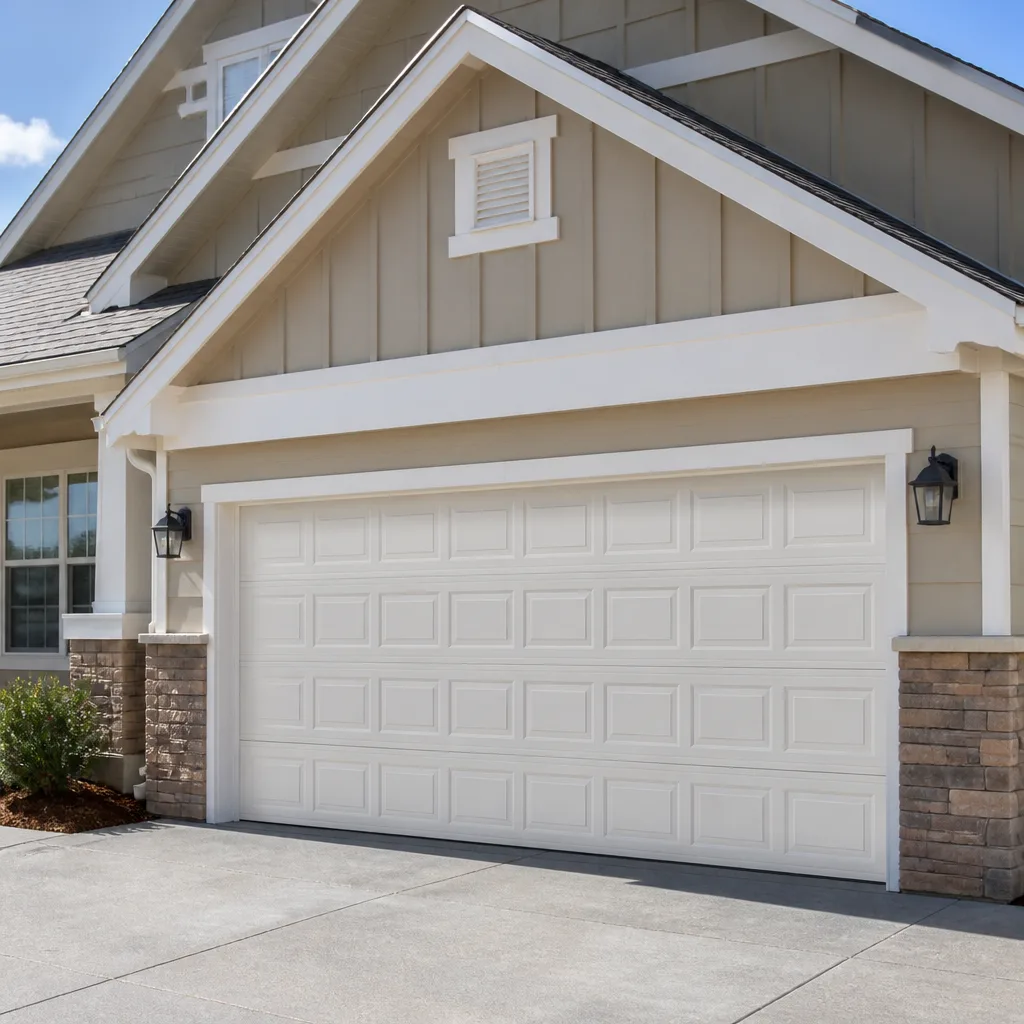 Raised-panel steel
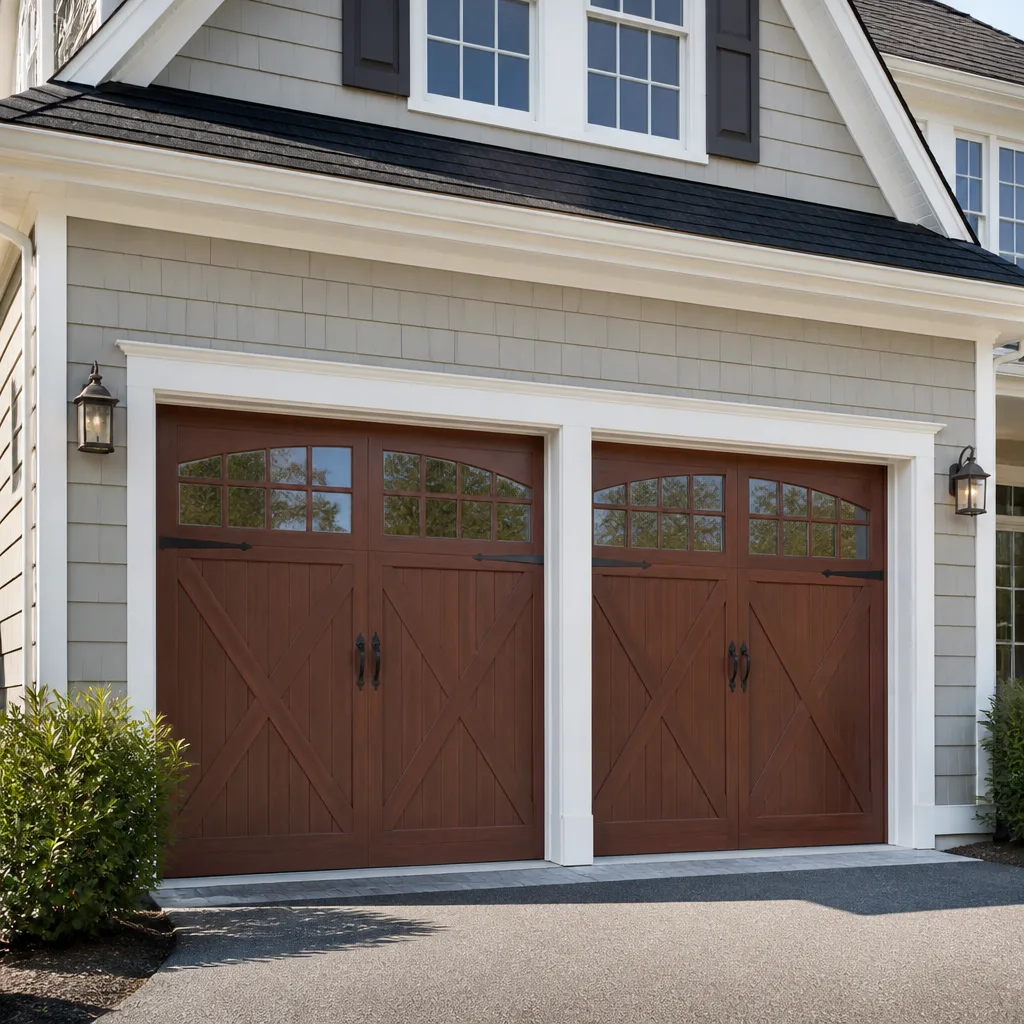 Carriage house
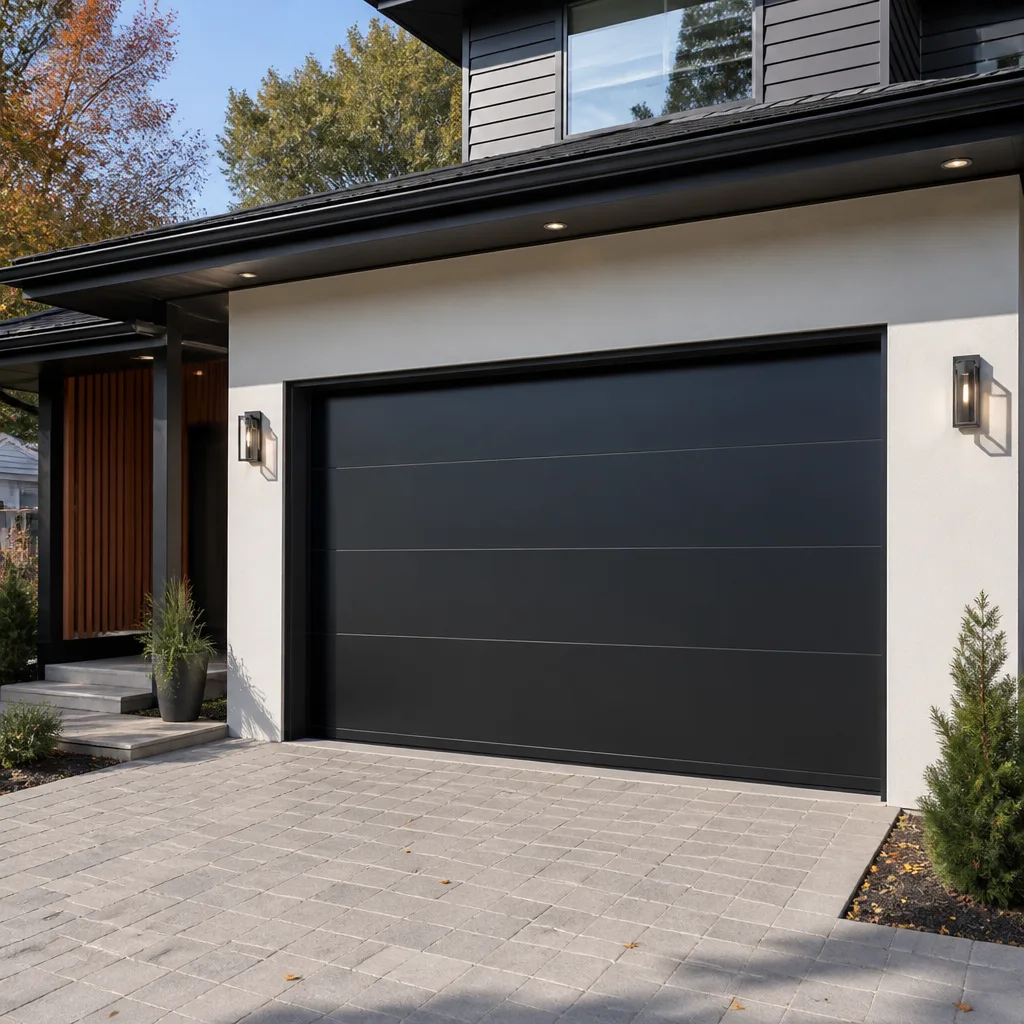 Modern flush
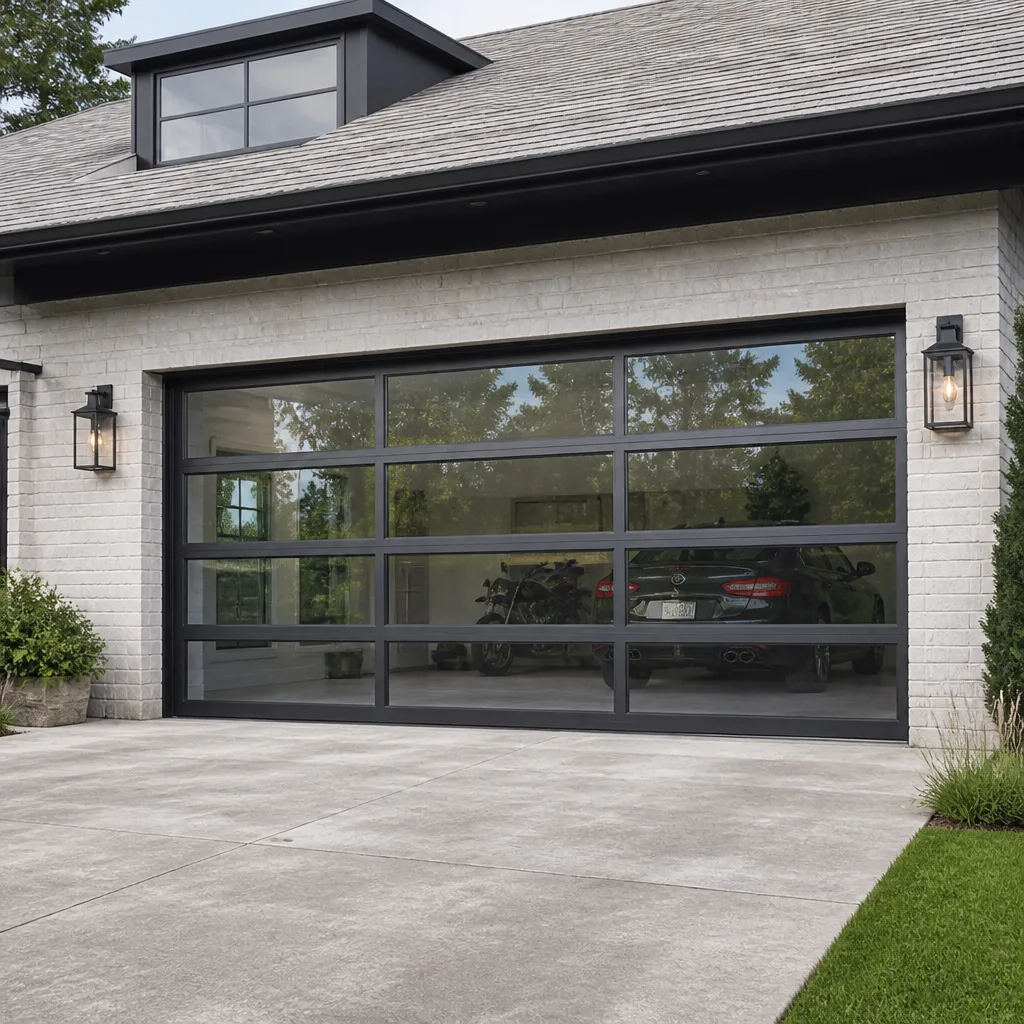 Full-view glass
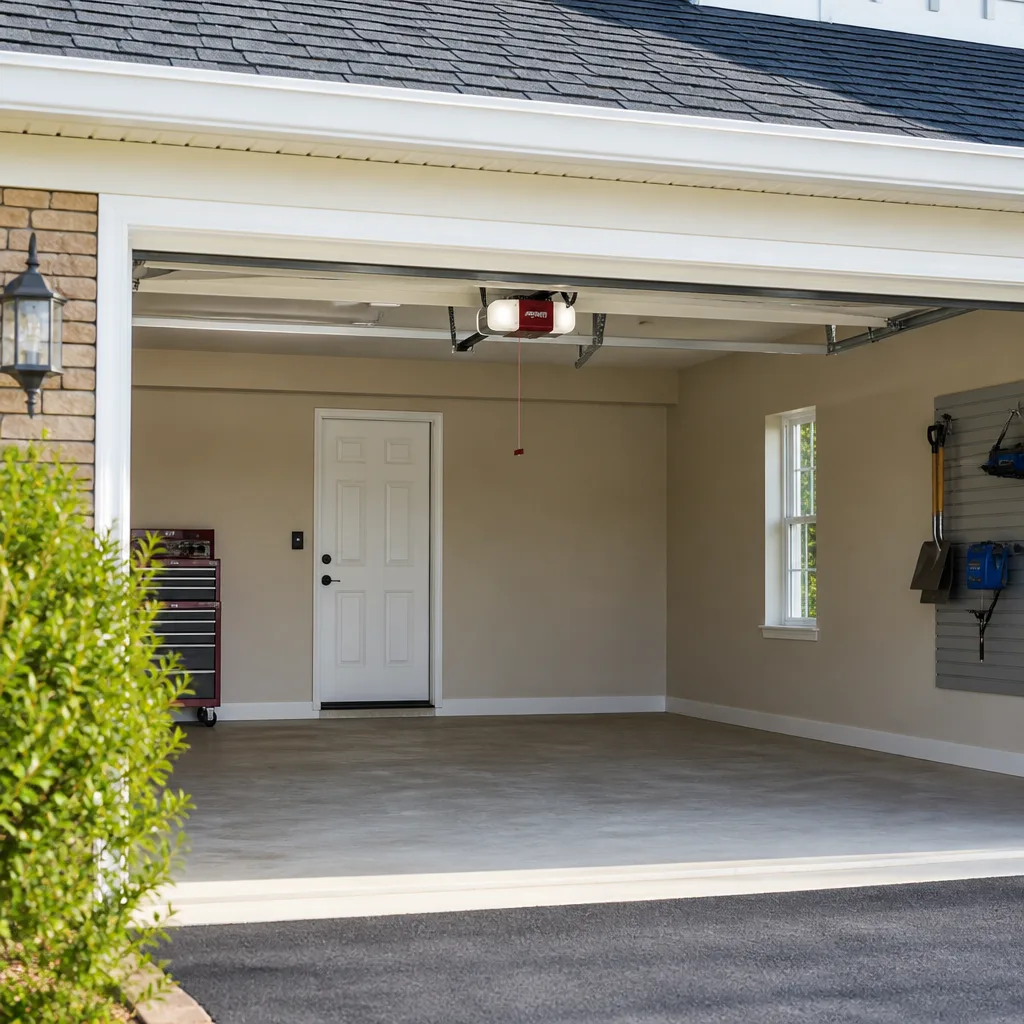 LiftMaster openers
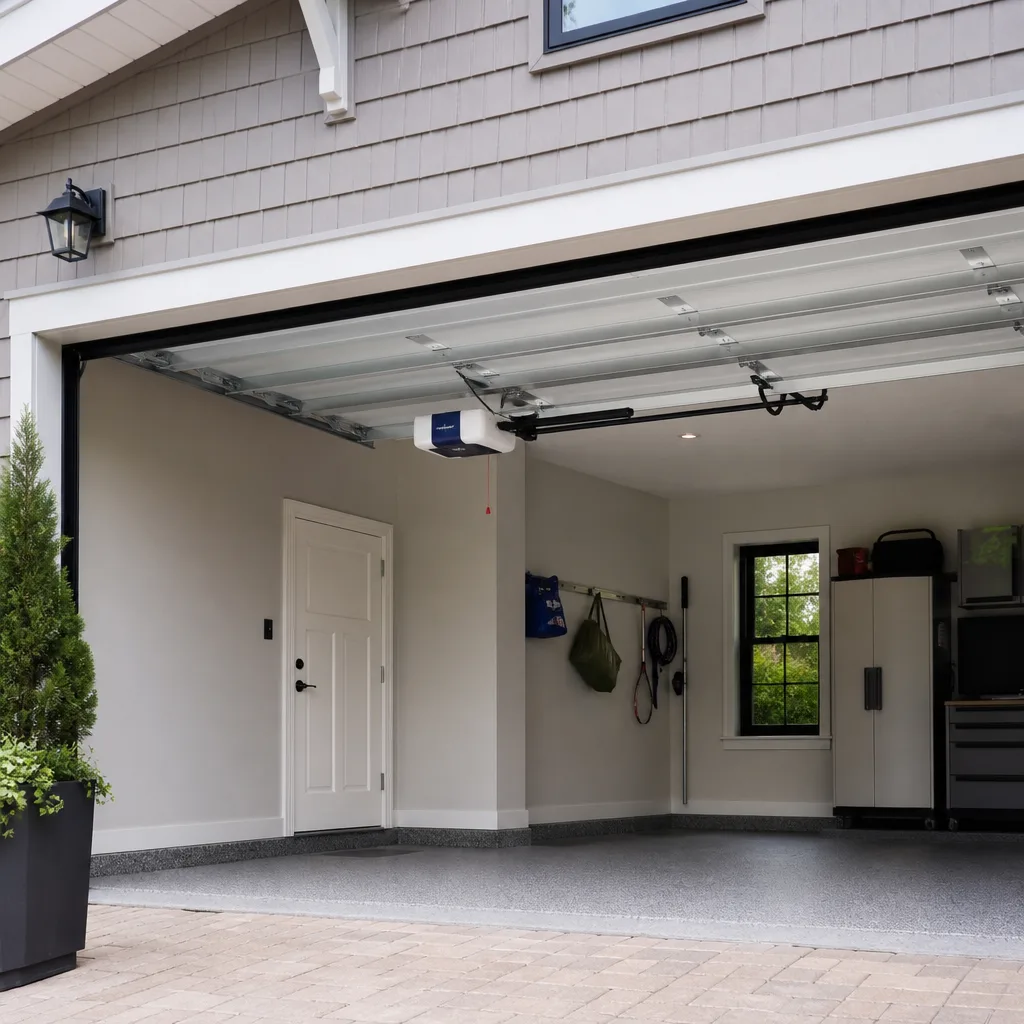 Chamberlain openers
Full 25-point door and opener safety check with every visit - springs, cables, rollers, tracks, and your LiftMaster or Chamberlain opener included
You get a price before we start. It does not change when the truck arrives.
Get your free estimateHow to Hire a Garage Door Contractor in Los Angeles: A Step-by-Step Guide
The top Yelp result for “garage door repair LA” is not a reliable safety signal. Some of the most-reviewed shops in Los Angeles are lead aggregators that resell your call to an unvetted technician who may or may not know a torsion spring from a tension spring. This guide gives you the exact vetting filter to use before anyone shows up at your door, so you can tell a genuine specialist from a middleman in about 60 seconds and avoid paying twice for the same repair.
Styles & brands we work with
Quick Answer
To hire a garage door contractor in Los Angeles, verify their California contractor license through the CSLB, confirm they specialize in garage doors rather than general handyman work, ask which opener brands they stock parts for on the truck, require a written quote before approving work, and get the price agreed before the tech arrives. A legitimate specialist will answer all five of these without hesitation; a middleman will stall on at least two.
Table of Contents
- Verify the California Contractor License First
- Specialist, Generalist, or Middleman: The 60-Second Test
- Questions That Separate Brand Experts from Guessing Techs
- How to Read a Garage Door Quote in Los Angeles
- The Three Contract Clauses LA Homeowners Should Push Back On
- What Brand Compatibility Actually Means When You Hire
- Common Mistakes to Avoid
- When to Call a Professional
- Frequently Asked Questions
- The Bottom Line
Verify the California Contractor License First
California has some of the strictest contractor licensing rules in the country, and garage door work falls under the CSLB (Contractors State License Board) umbrella. Any company charging more than $500 for labor and materials must hold a valid California contractor license. Here’s the problem: Los Angeles is full of unlicensed operators who stay under that threshold by splitting invoices or taking cash jobs, which leaves you with zero recourse if the repair fails a month later.
Verifying a license takes under two minutes. Go to the CSLB website, enter the business name or license number, and check three things:
- The license status says “Active.” Suspended, expired, or revoked licenses are public record for a reason.
- The business name on the license matches the name on the quote. Some operations borrow or rent license numbers from other companies. Mismatched names are a red flag.
- The license classification covers garage door work. A C-61/D-28 (Door and Gate) classification is the specific one for garage doors. A general B license can legally do doors, but a specialist classification tells you the company’s primary trade is doors, not kitchens and bathrooms.
We’ve worked on garage door systems across Los Angeles for years, and here’s what the CSLB verification process catches most often: a “company” that’s actually a solo operator using a relative’s license, a lead-gen service that has no license at all because they don’t do the work, or a licensed general contractor who’s never touched a Clopay track system in their life. The license check is your first filter, not your last, but it eliminates about half the bad actors immediately.
One more note specific to Los Angeles market conditions: unlicensed operators cluster around high-density rental areas where landlords are less likely to ask questions. Hollywood, Koreatown, and parts of the Valley see disproportionate unlicensed activity. If you own a home in these areas, run the license check every time, no exceptions.
Specialist, Generalist, or Middleman: The 60-Second Test
There are three types of people who will answer your call for garage door work in Los Angeles, and they are not equally qualified. Before you book anyone, run this 60-second test on their website, their Yelp page, and their phone greeting.
The Specialist. Garage doors are the entire business. Their site talks about springs, cables, tracks, openers, and panels. They list brand names like LiftMaster, Genie, and Chamberlain because they actually stock parts for those lines. When you call, the person answering can ask intelligent questions about your door’s symptoms. This is who you want.
The Generalist. They do plumbing, HVAC, electrical, and “garage doors” as a fourth or fifth service. Their techs might install a water heater in the morning and attempt a torsion spring replacement in the afternoon. The problem isn’t effort; it’s reps. A generalist tech might see five garage doors a year. A specialist sees five a week. The diagnostic gap is enormous, especially on opener electronics and safety sensor issues.
The Middleman. This is the entity that spends heavily on Google Ads and Yelp sponsored placement, has hundreds of five-star reviews, and never actually performs any work. They resell your job to whoever picks up the phone. You’ll know them by the generic language on their site (“full-service garage door solutions” with no brand names, no specific services, no physical address), the call center greeting, and the fact that they can’t answer a single technical question without “checking with a tech.” Los Angeles is one of the worst markets in the country for lead-gen garage door operations because of the population density and the volume of calls.
Here’s the 60-second test in practice: visit the company’s website and look for two specific things: a list of brands they service (not just “all major brands,” but actual names), and a physical address. If both are missing, you’re looking at a lead-gen operation. If you see a long list of unrelated services like plumbing and roofing, you’re looking at a generalist. If the site talks exclusively about garage doors and names specific manufacturers, you’ve found a specialist.
Questions That Separate Brand Experts from Guessing Techs
Most homeowners don’t know what to ask a garage door contractor, so they default to price and availability. Price matters, but asking only about price is how you end up with a $49 spring that fails in eight months. Here are five questions that separate technicians who know their craft from technicians who are improvising.
1. “Which opener brands do you stock parts for on the truck?” Every legitimate garage door specialist carries parts for multiple opener brands because they know the tech will be standing in your garage, not a parts warehouse. A tech who “has to order parts” for a common Chamberlain or Genie opener is either under-stocked or inexperienced. At Chaparral, Garage Door Opener Repair in Los Angeles means showing up with parts for LiftMaster, Chamberlain, Genie, and other major brands already on the truck, because we know which systems dominate the LA market.
2. “Can you walk me through what you’re checking before you touch anything?” A real diagnostic follows a sequence: visual inspection of springs and cables, alignment check on tracks, engagement check on the opener, safety sensor test. A guessing tech starts “fixing” things immediately and figures out the diagnosis from your reaction to the bill.
3. “What’s the torsion spring cycle rating on the spring you’re recommending?” This single question will expose more pretenders than almost any other. Torsion springs are rated in cycles (one cycle is one complete open and close). Cheap springs are rated for 10,000 cycles; quality springs run 20,000 to 30,000+. If the tech doesn’t know what a cycle rating is, or looks confused, you’ve learned something important about who’s in your garage.
4. “Do you install doors you didn’t sell?” Some installers will only hang doors purchased through them, which is fine if you want a door from their catalog. But if you’ve already chosen a specific Clopay or Amarr door for your home, a brand-agnostic installer who works across manufacturers is more likely to install what you want instead of what they have in the warehouse. We work on doors from every major manufacturer, which means Garage Door Installation in Los Angeles decisions are driven by your home’s needs, not our inventory.
5. “Is garage door work your primary business?” Ask it directly. If the answer is anything other than an immediate yes, ask what percentage of their calls are garage door work. Under 70%, you’re talking to a generalist. That’s not disqualifying for simple jobs, but for opener diagnostics, spring replacement under tension, or a full track realignment, you want someone whose entire professional identity is garage doors.
How to Read a Garage Door Quote in Los Angeles
Los Angeles garage door repair pricing varies by neighborhood, door type, and the specific failure, but there are patterns that signal a trustworthy quote versus a bait-and-switch. Here’s what you should see, what you should question, and what should send you looking elsewhere.
Line-item pricing is a must. A legitimate quote separates parts from labor and identifies each specific component: torsion spring, extension spring, cable set, track section, opener motor, sensor, logic board. Vague categories like “repair services” or “labor and materials” with a single number attached is how you end up paying $700 for a $250 spring replacement.
Bait spring prices are everywhere in LA. You’ll see ads for “$49 spring replacement” or “$79 tune-up.” These numbers are almost always bait. The tech arrives, “discovers” additional problems, and the final invoice lands at $400 to $600. A legitimate spring replacement in Los Angeles typically runs $180 to $340 depending on the spring type and door weight. If a quote starts at less than half of the market floor, the missing money will appear somewhere else.
No in-person inspection means the quote is unreliable. This is non-negotiable. A technician who quotes a price over the phone without seeing the door cannot know the spring size, the cable condition, the track alignment, or the opener incompatibility. Phone quotes are estimates at best and bait at worst. A real specialist will offer a free on-site quote where the price is confirmed before any work starts. The price you’re quoted should be the price you pay, agreed before a single tool comes out.
Watch for unnecessary replacement recommendations. If you called about a spring and the quote includes a new opener, a new door, and new tracks, ask why each item is listed. A door with a broken spring doesn’t automatically need a new opener. A technician who “finds” four additional problems in the first ten minutes is often looking for invoice padding. The honest approach is to tell you what actually needs repair versus what could wait. Repair or replace, we’ll tell you which one actually makes sense.
For a full breakdown of what repairs cost in this market, see our Garage Door Repair in Los Angeles page, where we publish realistic price ranges by repair type.
The Three Contract Clauses LA Homeowners Should Push Back On
Most garage door repair contracts in Los Angeles are one page, but that page can contain clauses that strip away your protections. Here are the three we see most often and why you should strike or negotiate each one.
1. “Payment in full due upon completion regardless of satisfaction.” Read that carefully: you’re being asked to pay before you’ve tested the door. You should always have the opportunity to run the door through several full cycles, test the opener remote, check the safety sensors, and confirm the balance before you sign anything or hand over payment. A specialist who stands behind the work will let you test it first.
2. “Any additional work discovered during repair is pre-authorized up to $500.” This is one of the most common contract tricks in Los Angeles. The repair is quoted at $250, the tech “discovers” a cable issue, and suddenly there’s a pre-authorized add-on for another $300. Strike this clause. Require that any additional work be re-quoted and re-approved by you before it starts.
3. “Warranty valid only if the door is serviced annually by the installing company.” This warranty clause is common in the LA market and it essentially turns a free warranty into a paid subscription. Legitimate warranties cover the part and labor for a specified period without requiring additional paid service. A spring rated for 25,000 cycles should last years; it doesn’t need an annual “tune-up” from the same company to stay under warranty.
What should a good contract include? Clear scope of work, itemized parts with brand names (not just “spring” but “225x2x31 torsion spring”), labor hours, the warranty term on parts and labor separately, and a final price. If the contract is three paragraphs and feels thin, that’s not simplicity; that’s missing protection.
What Brand Compatibility Actually Means When You Hire
Brand compatibility sounds like marketing talk, but it’s a practical question: does the person in your garage actually know the system installed in your home? Los Angeles homes run the full gamut, from 1960s mechanical openers to smart LiftMaster and Chamberlain units that pair with phone apps and home security systems. Choosing the right equipment starts with Choosing the Right Garage Door Brand: A Buyer’s Guide for Los Angeles.
The eight brands that dominate the Los Angeles residential market are LiftMaster, Chamberlain, Genie, Clopay, Amarr, Wayne Dalton, Craftsman, and Raynor. Each has its own engineering: Genie openers use screw-drive systems in many models, LiftMaster builds wall-mount jackshaft openers popular in LA’s many converted garages, Chamberlain leads the smart-home integration space, and Raynor doors use torsion spring configurations that differ measurably from other manufacturers.
A technician who “works on all brands” but hasn’t been trained on a Genie screw-drive or a Raynor torsion setup will improvise. A technician who names brands specifically and can tell you the difference between a Chamberlain belt-drive and a LiftMaster chain-drive has depth. We work on your brand, which matters more in Los Angeles than almost anywhere: the city’s housing stock spans seven decades, meaning the door in a Silver Lake hillside home is a completely different system from the door in a Porter Ranch tract house. A tech who only knows one era of equipment is going to struggle with the other.
Your opener is its own system. It’s not an accessory to the door; it’s a motorized unit with its own logic board, sensors, and mechanical drive. A company that lumps “opener repair” into general door repair is signaling that they don’t treat it as the separate technical discipline it’s become. When your opener fails, you want a tech who has diagnosed hundreds of opener-specific failures across multiple brands, not someone who installs water heaters on Tuesday and “also does openers.”
Start your search at the Chaparral Garage Door Repair home page if you want a sense of what dedicated, multi-brand coverage looks like.
Common Mistakes to Avoid
- Hiring purely on price without verifying the license. Los Angeles is saturated with under-the-table operators who beat legitimate pricing by 30% and disappear when the repair fails in three months. The CSLB check takes two minutes and eliminates the bottom third of the market.
- Accepting a phone quote as final. No technician can accurately price a spring replacement, opener repair, or track realignment without seeing the door. A free on-site estimate with a confirmed price is standard for legitimate operators. Anyone who insists the phone quote is “good enough” is planning to adjust it upward.
- Believing that review volume equals legitimacy. Lead aggregators generate hundreds of reviews by reselling jobs to unvetted techs. A five-star review means the middleman answered the phone politely, not that the repair held up. Check the review content for specifics: brand names, actual repairs performed, part numbers. Generic “great service!” reviews are worthless.
- Skipping the safety sensor check after an opener repair. Los Angeles has one of the highest densities of garage-adjacent living in the country, with converted garages, in-law units, and kids playing in dense neighborhoods. After any opener work, run the door on a 2×4 test: place a 2×4 flat under the door and close it. The door should reverse within two seconds. If it doesn’t, the sensors were not properly recalibrated.
- Choosing a company that doesn’t stock the opener brand you own. If you have a Chamberlain opener and the tech says they’ll “run out and get parts,” you’re paying for their lack of preparation. Specialists carry parts for the major brands because they know what’s installed in LA homes.
- Allowing work to start before you’ve approved a written quote. Verbal agreements in Los Angeles garage door repair are a recipe for invoice shock. The price must be quoted, agreed, and in writing before anything is disassembled.
- Treating a broken garage door as a non-urgent repair. A door that won’t close is an open invitation in a city with property crime concerns. LA homeowners should treat a failed door as a same-week priority, not a someday project.
When to Call a Professional
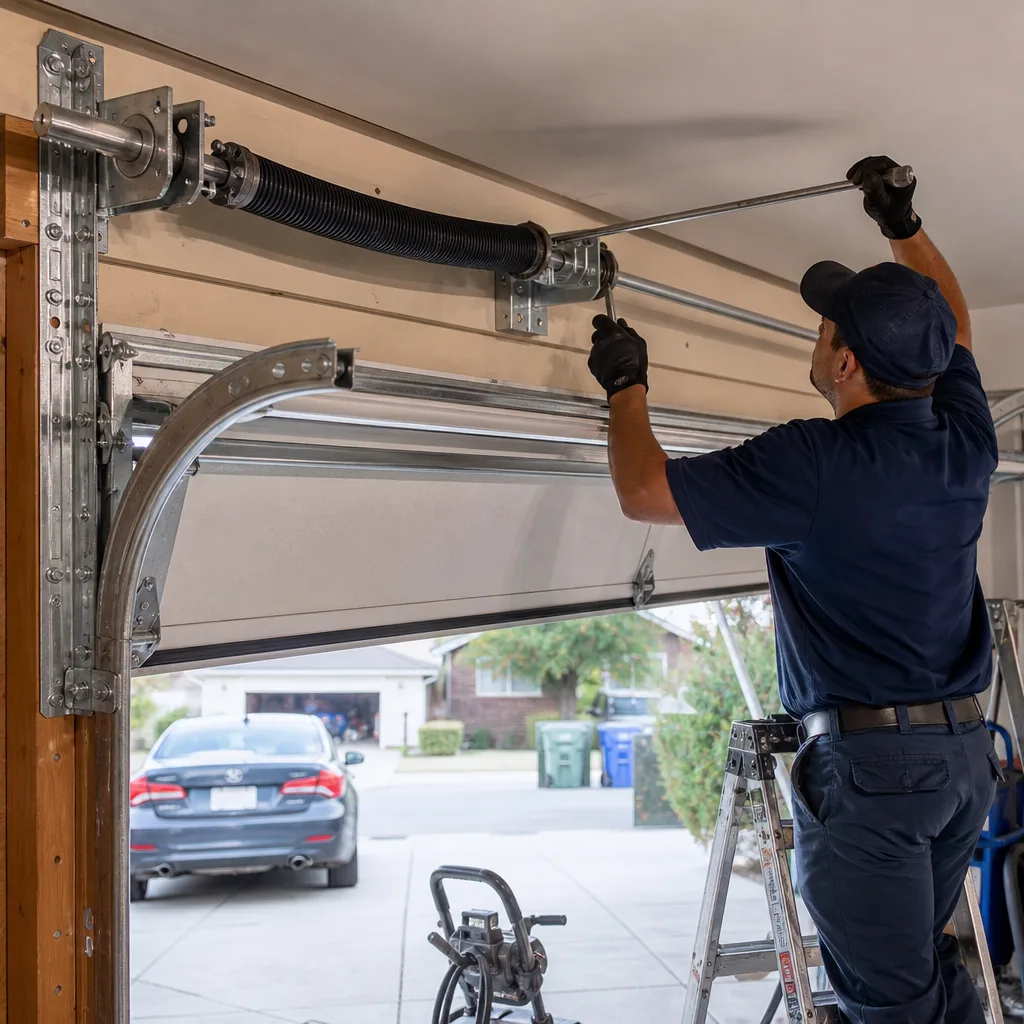
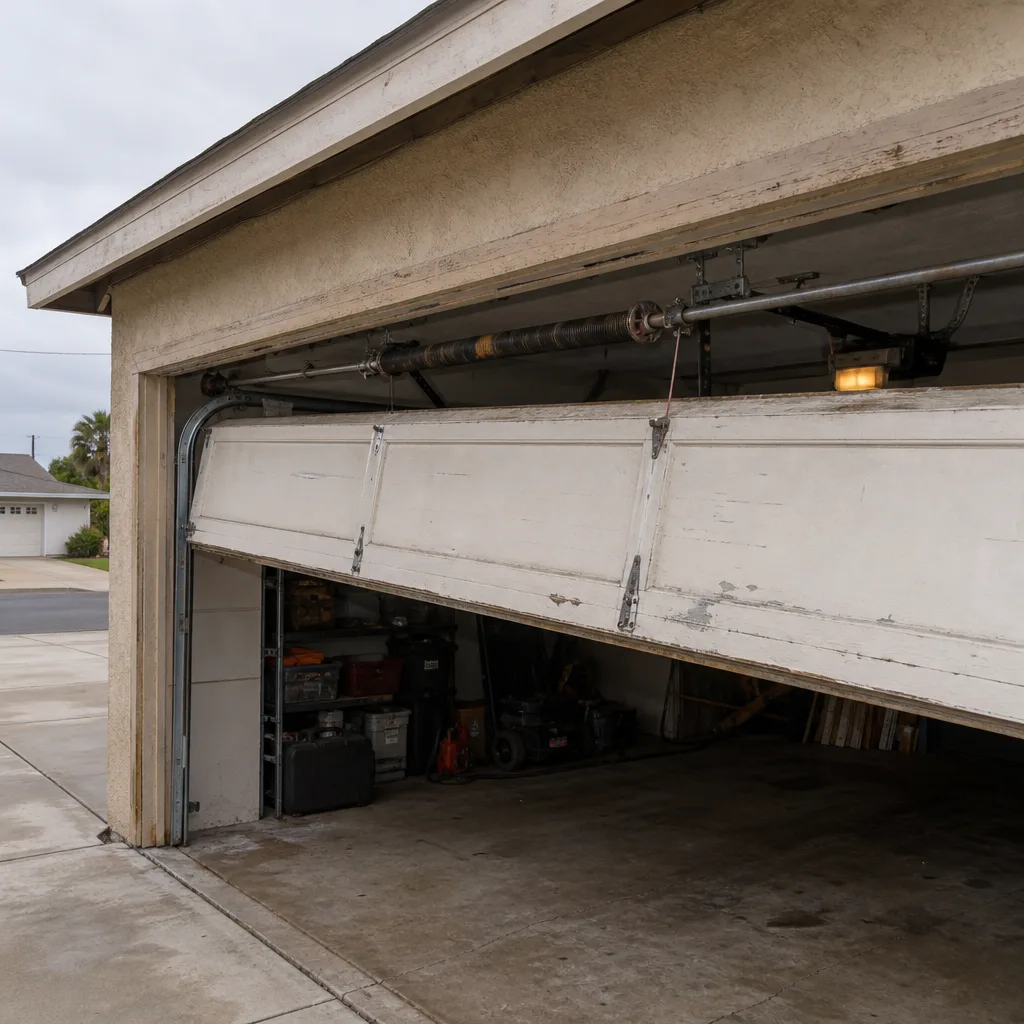
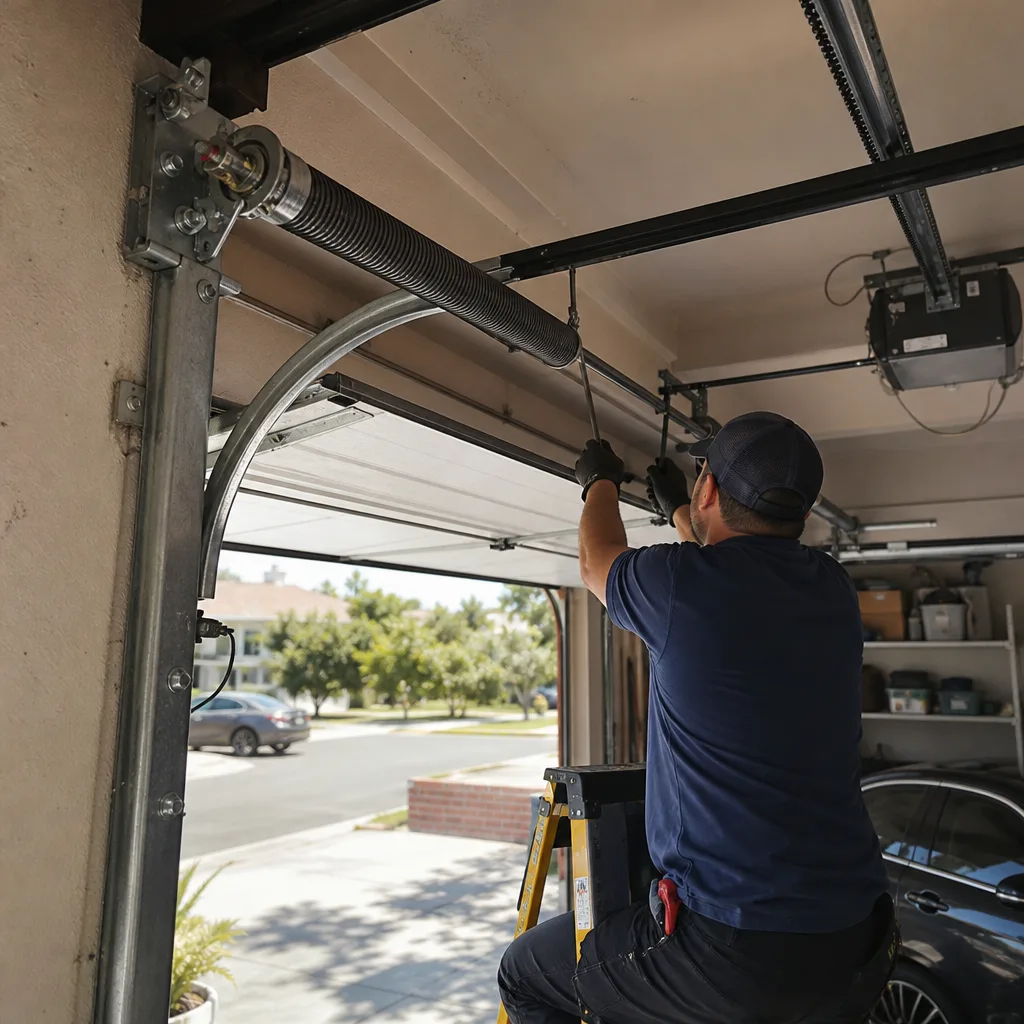
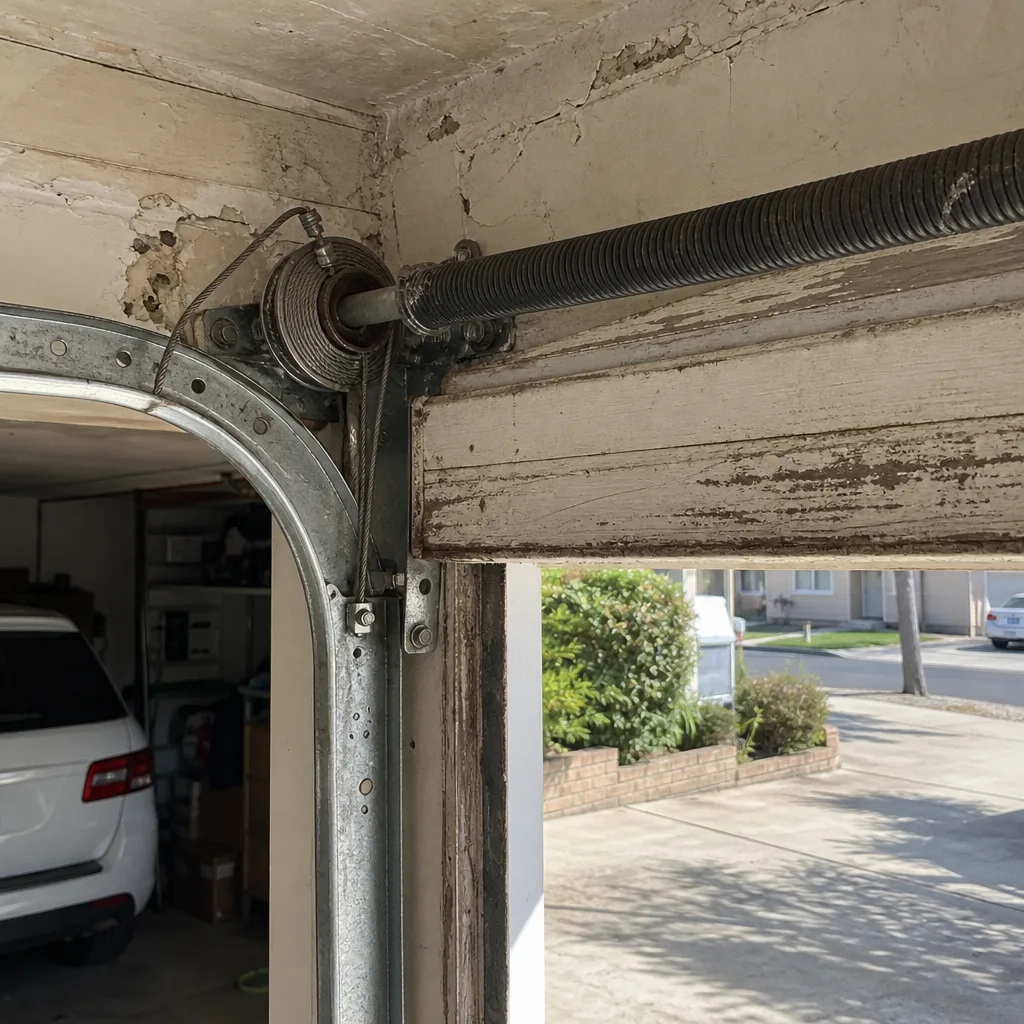
Any garage door issue involving the torsion spring system, the opener motor, or the track alignment is a professional repair. Torsion springs are under hundreds of pounds of tension and release that energy catastrophically when mishandled. Opener systems combine electrical components, moving parts, and safety sensors that need specific calibration. Track work requires precise measurements that are nearly impossible to get right by eye. If your door makes a loud bang, opens unevenly, reverses mid-cycle, or the opener makes noise but the door doesn’t move, stop using the door and call someone who does this work every day. Chaparral Garage Door Repair offers free estimates in Los Angeles. Call (866) 472-6497 and we’ll get you back up and running.
Frequently Asked Questions
Most garage door repairs in Los Angeles fall between $125 and $500 depending on the specific failure, with spring replacement typically running $180 to $340 and opener repair landing between $150 and $400. Call (866) 472-6497 for an exact quote; estimates are free and the price is confirmed before any work starts.
Yes, any garage door work over $500 requires a valid California contractor license issued by the CSLB, and unlicensed operators are common in Los Angeles. Verify the license status, business name match, and C-61/D-28 classification before booking anyone.
A lead generator will have no physical address on their website, no list of specific brands they service, and customer service agents who can’t answer technical questions without “checking with a tech.” The reviews will be generic and mention the booking experience, not the actual repair.
Yes, emergency repairs in Los Angeles are typically available same-day from companies that keep common parts on the truck for the major brands. For ongoing protection, see our Seasonal Garage Door Care for Los Angeles: Year-Round Homeowner’s Guide. A spring or cable that fails mid-cycle needs immediate attention; for opener or replacement work, schedule a free estimate and get a written quote.
A reputable company will confirm the price after the on-site inspection and before any work begins. If the scope needs to change, that change should be re-quoted and re-approved by you in writing before anything additional happens. Call (866) 472-6497 for a free estimate with upfront pricing.
Yes, we stock parts for LiftMaster, Chamberlain, Genie, and other major brands because those systems dominate the Los Angeles market. A specialist who works on your brand shows up ready to diagnose and repair on the first visit, not after a parts run.
The Bottom Line
Hiring a garage door contractor in Los Angeles comes down to a five-step filter: verify the license, confirm specialization, ask brand-specific questions, require a written line-item quote, and read the contract before signing. Do these five things and you’ll eliminate the lead-gen middlemen, the unlicensed operators, and the generalist techs who are learning on your door. Skip any one of them and you’re gambling. The stakes are higher than most homeowners realize: a garage door that fails is a safety risk, a security gap, and one of the most inconvenient breakdowns a home can have. Get it right the first time. Call (866) 472-6497 and we’ll get you back up and running.
Written by the team at Chaparral Garage Door Repair, serving Los Angeles since 2018.
See the difference
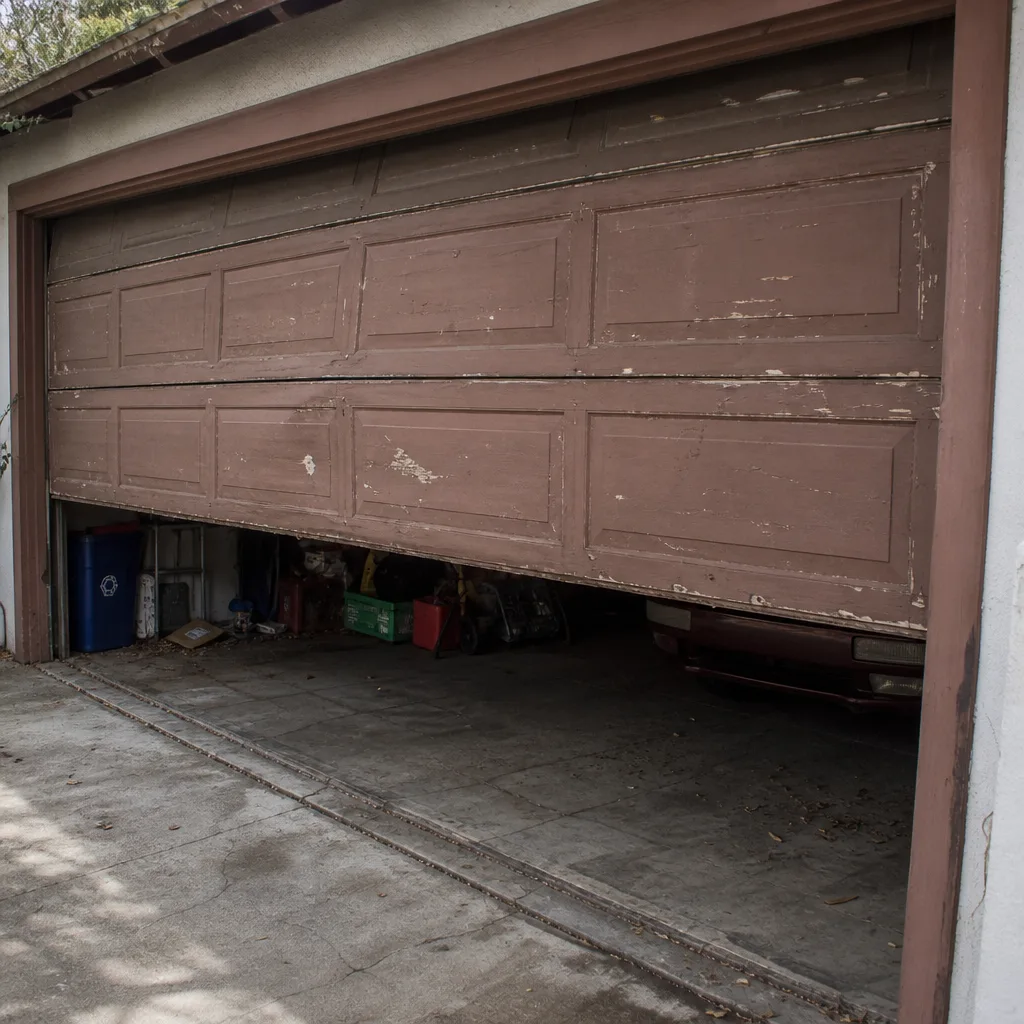 Before
 After
 Before
 After
 Before
 After